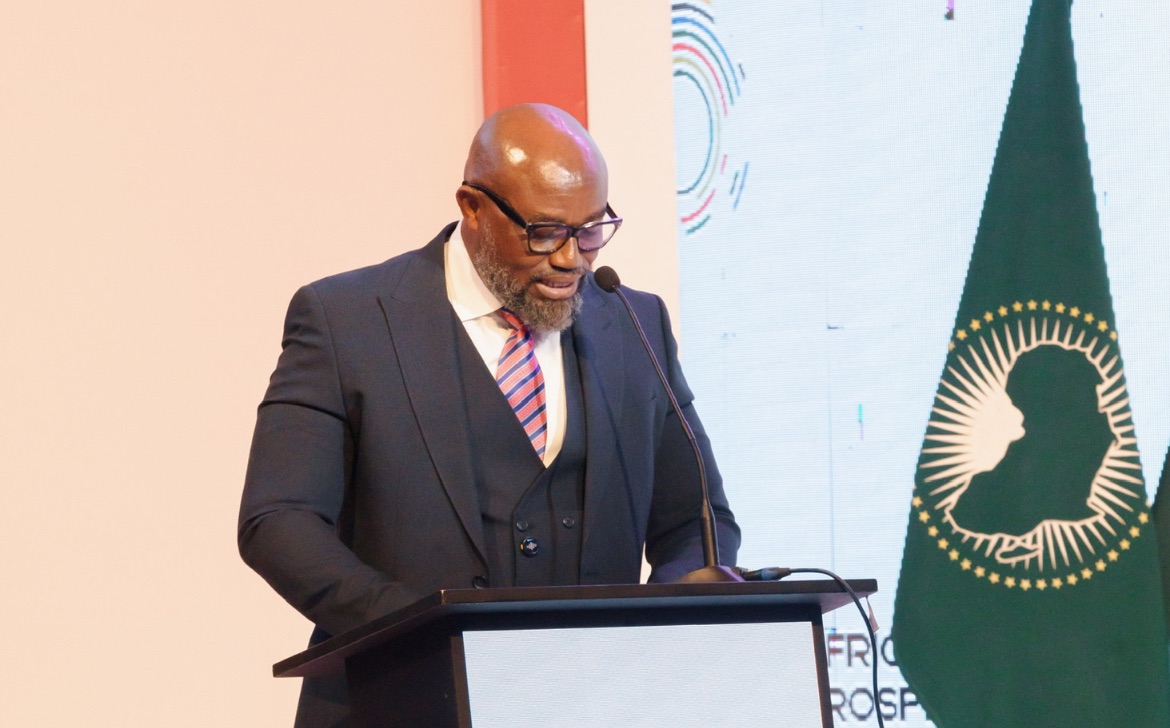

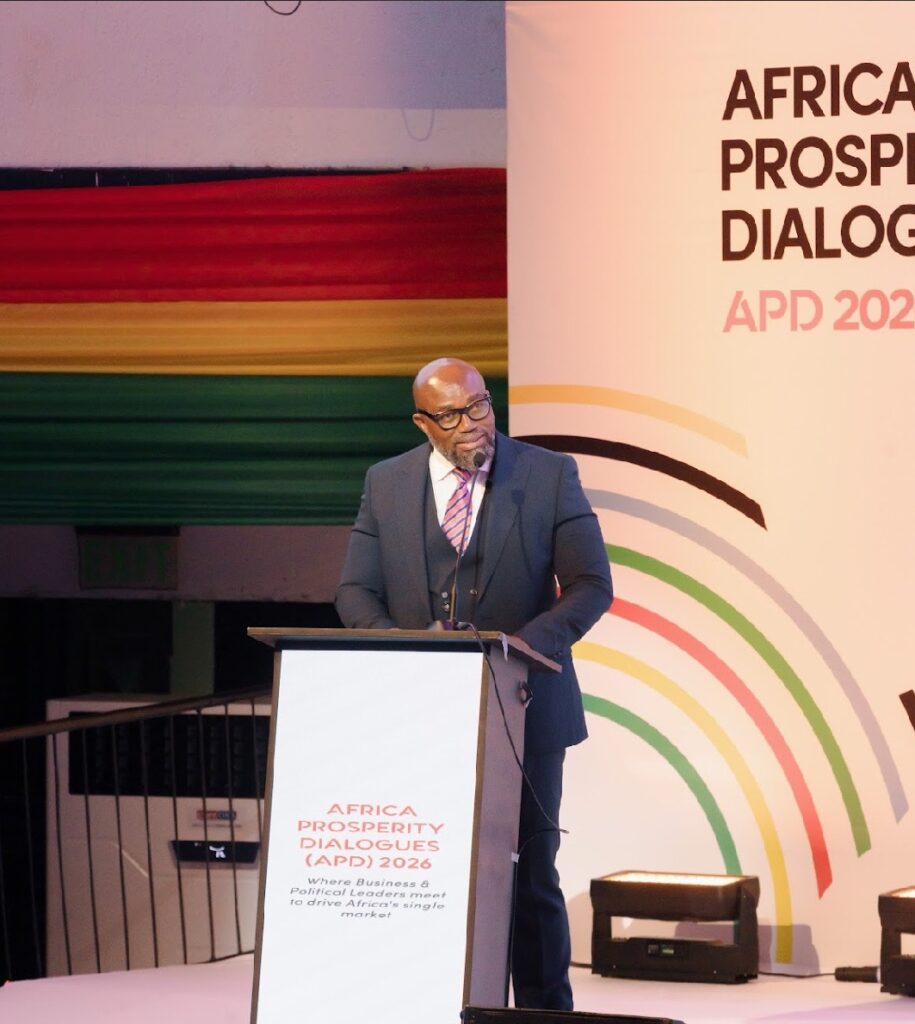
Executive Chairman of the McDan Group, Dr. Daniel McKorley, has urged African entrepreneurs—particularly women and young people—to fully harness the opportunities of the continent’s single market, describing small and medium-sized enterprises (SMEs) as the driving force behind Africa’s economic growth.
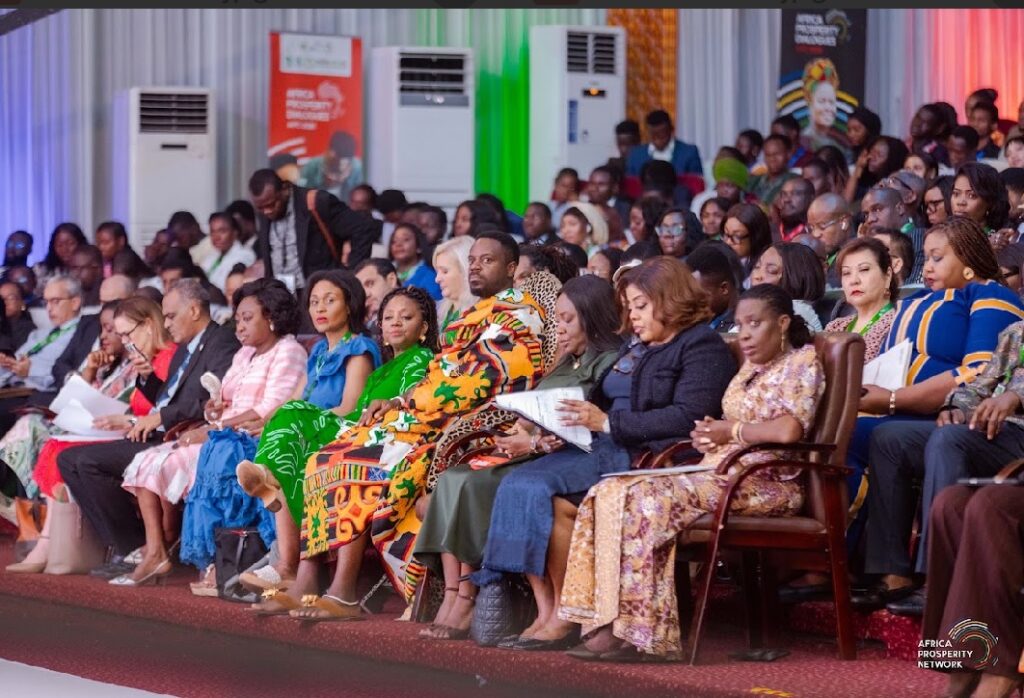
Speaking on Day Two of the 2026 Africa Prosperity Dialogues (APD) at the Accra International Conference Centre on Thursday, February 5, Dr. McKorley reflected on his entrepreneurial journey, recounting how he dropped out of school in 1996 and began trading maize across Ghana before venturing into coffee.
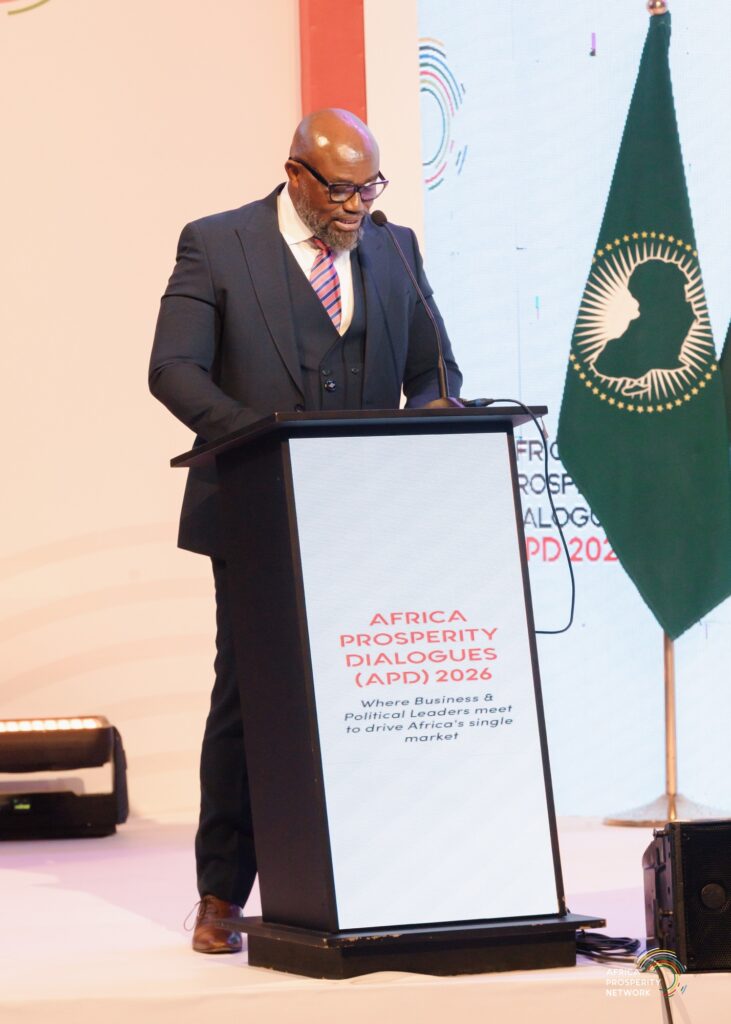
He revealed that his early business experiences shaped his commitment to women-led enterprises. “Along that journey, I realized that about 90 percent of the people I was dealing with were women. That is where my passion for women entrepreneurs was born,” he said.
Dr. McKorley highlighted Africa’s immense demographic and economic potential, noting projections that by 2050, one in every four people worldwide will be African. He cited the continent’s youthful population, expanding innovation hubs, rapid urbanization, and the African Continental Free Trade Area (AfCFTA) as critical assets for growth.
Despite these advantages, he expressed concern over Africa’s low levels of intra-continental trade, currently estimated at 15 to 18 percent—far below the nearly 60 percent recorded in Europe and Asia. He likened the situation to “having a big family but choosing to buy from strangers instead of trading with each other.”
According to Dr. McKorley, SMEs form the foundation of Africa’s economy, accounting for up to 80 percent of jobs across the continent. However, he acknowledged that high transport costs, inconsistent customs processes, and fragmented regulatory frameworks continue to constrain their growth.
“I’ve spent over 30 years in logistics and shipping—I eat, sleep, and breathe logistics. This challenge is not a market problem; it’s a system problem,” he stated.
To address these barriers, Dr. McKorley called for the adoption of digital trade platforms, one-stop border posts, and the mutual recognition of standards across African countries. He emphasized that regulatory harmonization is essential for SME survival and expansion. “Harmonization is not a technical issue. It determines whether a small business scales up or shuts down,” he said.
He also spotlighted the McDan Group’s efforts to enhance Africa’s trade connectivity through initiatives such as the Black Star Line and Conduct Trading Company, which facilitate cargo movement by sea and air. He stressed that trade growth is impossible without robust infrastructure, including ports, vessels, road and rail networks, and integrated logistics systems.
“If you don’t connect these, trade is not yours—you only talk about trade,” he remarked.
On women’s economic empowerment, Dr. McKorley noted that while women own a significant share of informal businesses across Africa, access to finance remains a major challenge. Through the McDan Group’s interest-free loan schemes, over 5,000 female entrepreneurs have received support to grow their businesses.
He concluded with a call for stronger collaboration among governments, financial institutions, and the private sector to create an enabling environment for SMEs, stressing that entrepreneurship—rather than wage employment alone—is key to absorbing Africa’s rapidly growing workforce.
“If we get this right, a small agro-processor in Tamale, a fashion entrepreneur in Nairobi, or a tech startup in Kigali will no longer think locally. They will think and operate as African businesses. This is our moment—move from potential to production, from conversation to commerce,” Dr. McKorley said.
Story by: Ernest Frimpong (0247220948) | Follow our social media handles @uktvghana | DM us for Ads on our website or any of our socials