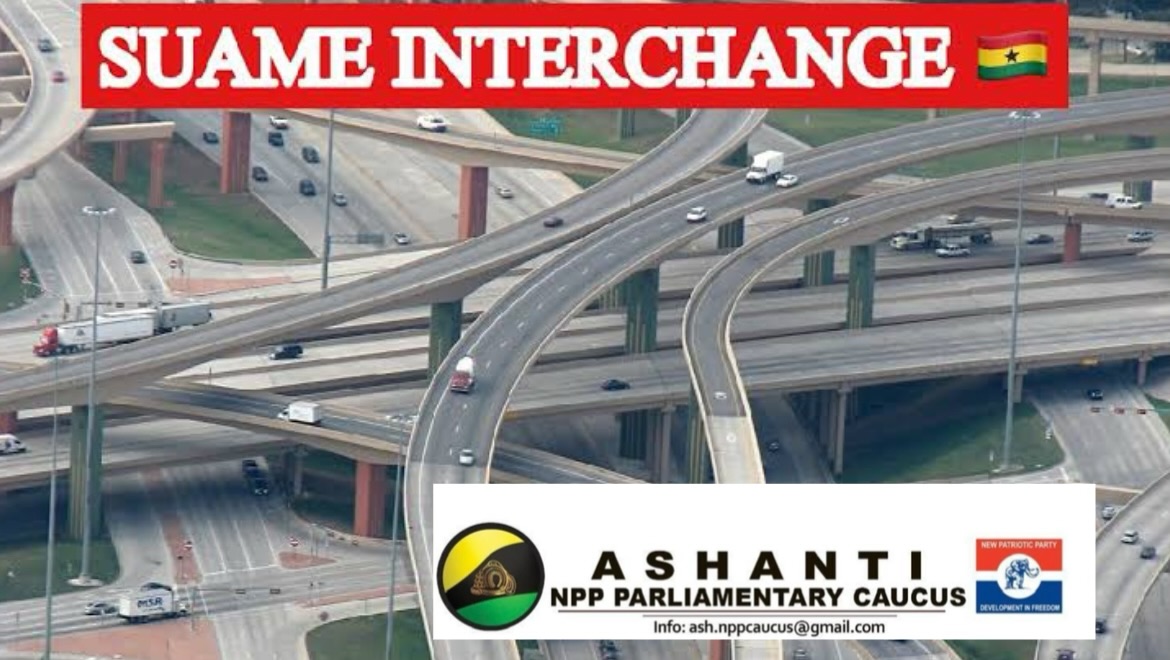

On Monday, February 9, 2026, the Ashanti Caucus of the New Patriotic Party (NPP) in Parliament strongly criticised the government’s decision to scale down the Suame Interchange Project from its original four-tier design to a two-tier configuration, warning that the move will fail to resolve Kumasi’s traffic congestion and could lock the city into long-term transport challenges.
The caucus described the move, justified by government on the basis of debt-related constraints and contractor drawdown challenges as technically flawed and inconsistent with sound urban transport planning.
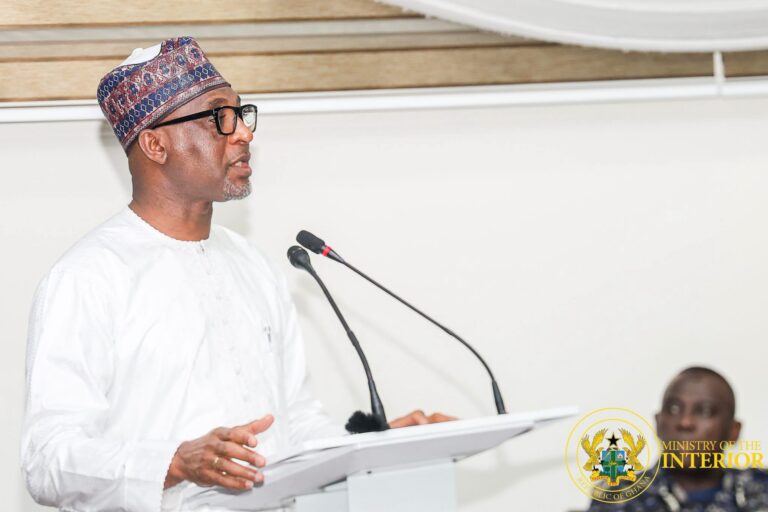
Delivering the statement on behalf of the caucus at the press conference, the Member of Parliament for Bantama and former Minister for Roads and Highways, Francis Asenso-Boakye, stressed that the interchange was deliberately designed as a four-tier, grade-separated system following extensive traffic modelling to address both current and future traffic volumes in Ghana’s second-largest city.
“The original design was not arbitrary. Every tier performs a specific traffic-separation function. Reducing it to two tiers fundamentally undermines the integrity of the entire system,” he warned.
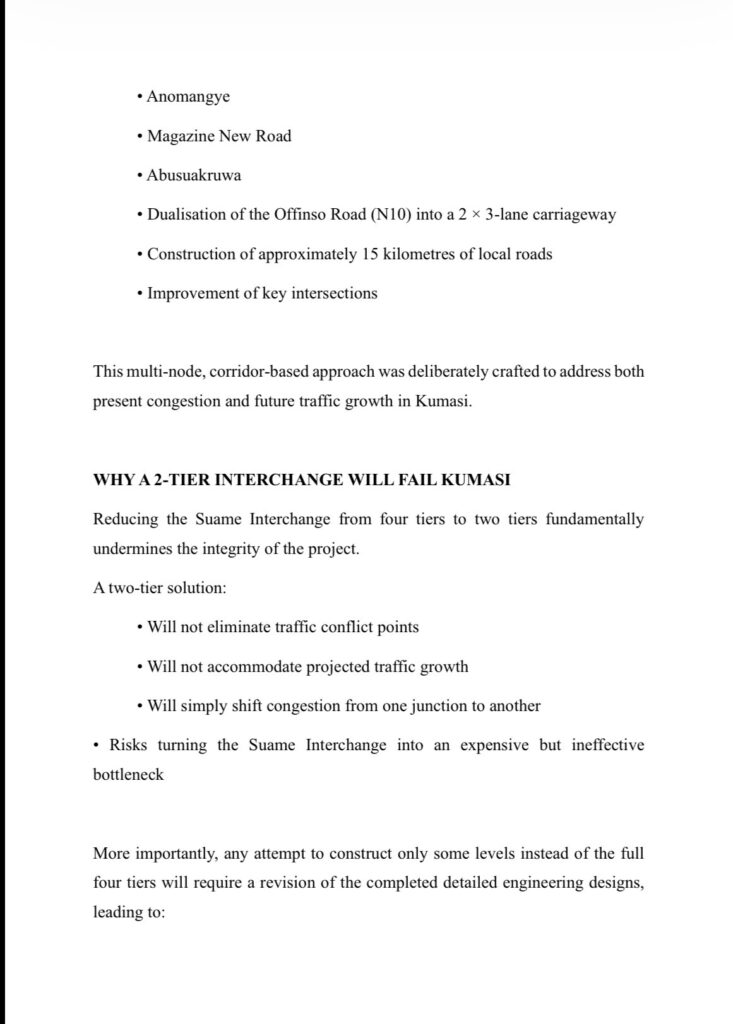
The MPs noted that Kumasi is not only a regional capital but a critical national transport hub linking major north–south and east–west corridors. Persistent congestion across Suame, Krofrom, Bantama, Abrepo Junction, Anomangye, Magazine, Abusuakruwa, and the wider metropolis, they said, has already reached intolerable levels.
They recalled that the project was initiated under the Akufo-Addo administration as a long-term solution, with Parliament approving the commercial and loan agreements in July 2022. The financing arrangement, backed by Deutsche Bank S.A. of Spain and Spain’s export credit agency, CESCE, underscored the project’s technical and financial credibility.
Despite disruptions caused by Ghana’s IMF programme and debt restructuring, the caucus said government prioritised the project by reallocating funding under the Afreximbank facility, allowing detailed engineering designs for all four tiers to be completed and foundation works to begin in 2024.
Warning of the implications of the revised scope, the MPs argued that a two-tier interchange would not eliminate traffic conflict points, would fail to accommodate projected traffic growth, and would merely shift congestion from one junction to another—turning the project into an expensive bottleneck.
They further cautioned that revising the design after detailed engineering works have been completed could result in delays, cost overruns, technical compromises, and contractual disputes.
“In urban transport engineering, under-designing is often worse than doing nothing, because it locks a city into congestion for decades,” the caucus stressed.
The MPs also questioned government’s funding priorities, pointing to new road projects being initiated elsewhere despite the inclusion of the Suame Interchange under the 2025 “Big Push” Road Programme, which was meant to guarantee sustained funding for strategic infrastructure.
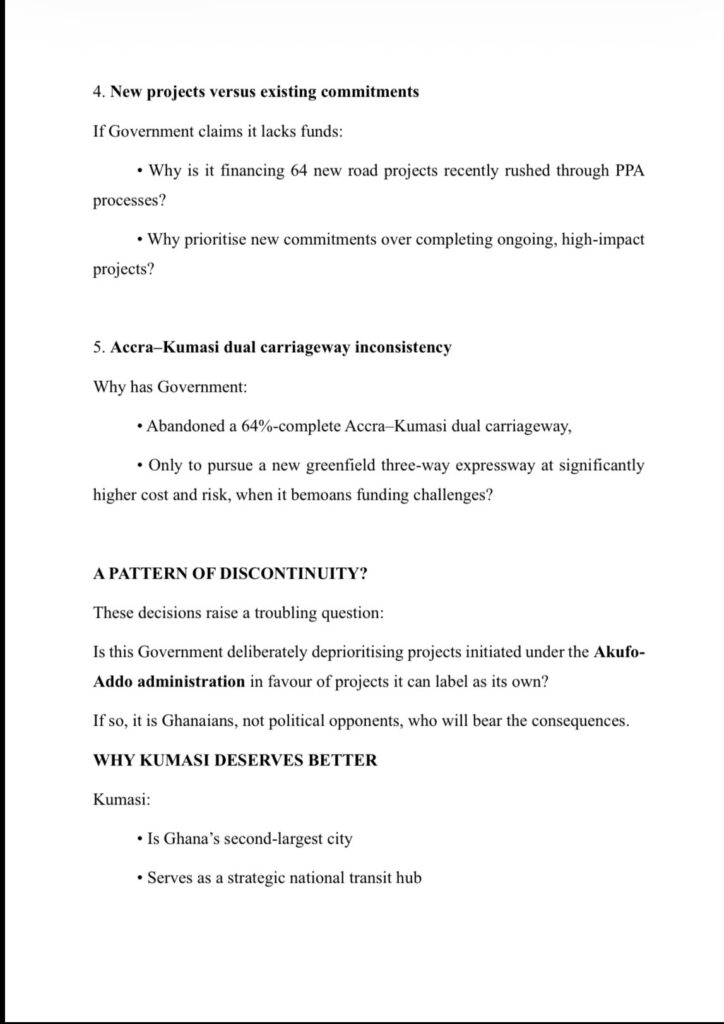
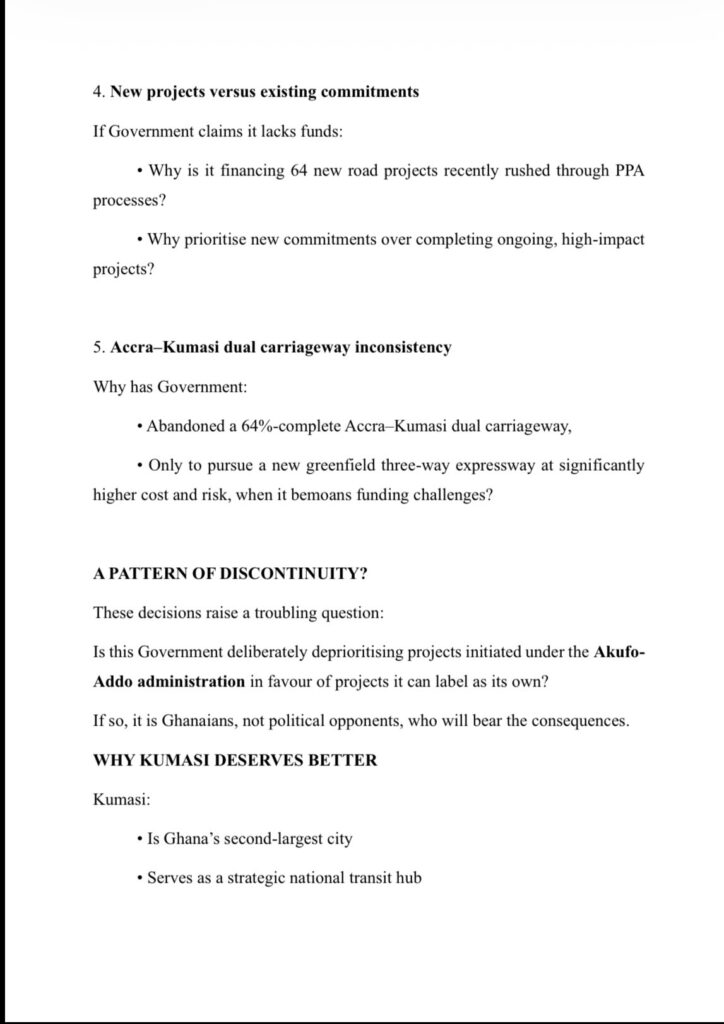
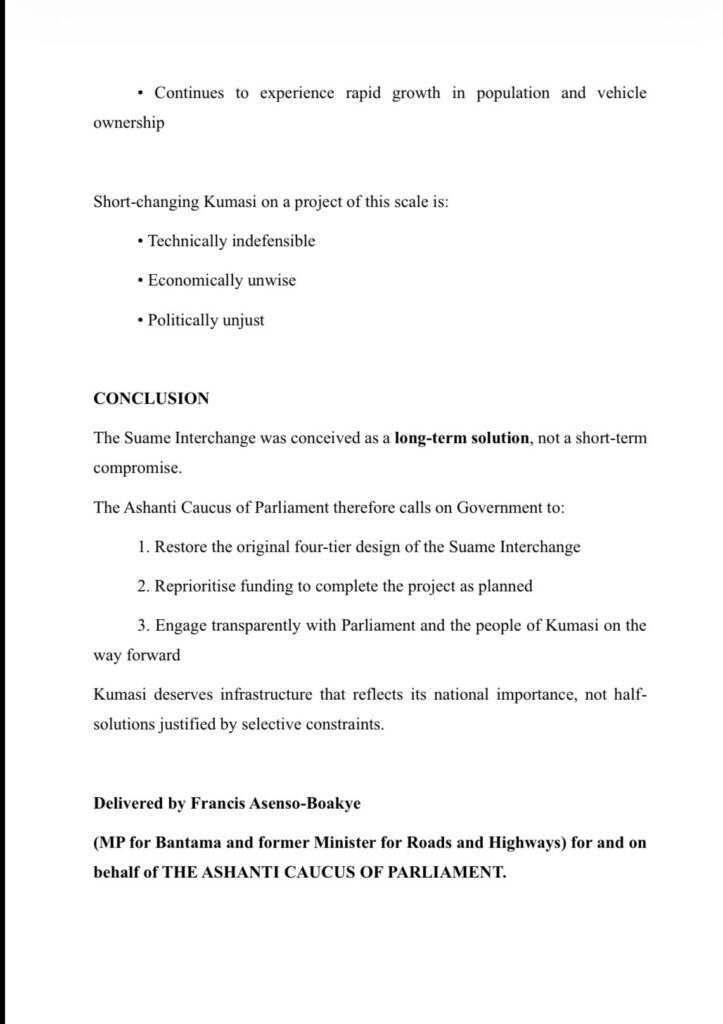
Concluding, the Ashanti Caucus of Parliament called on government to reconsider its decision, maintain the original four-tier design, and engage transparently with Parliament and the people of Kumasi.
“Kumasi deserves infrastructure that reflects its national importance,” Mr. Asenso-Boakye said. “Half-solutions justified by selective constraints will fail the city.”