
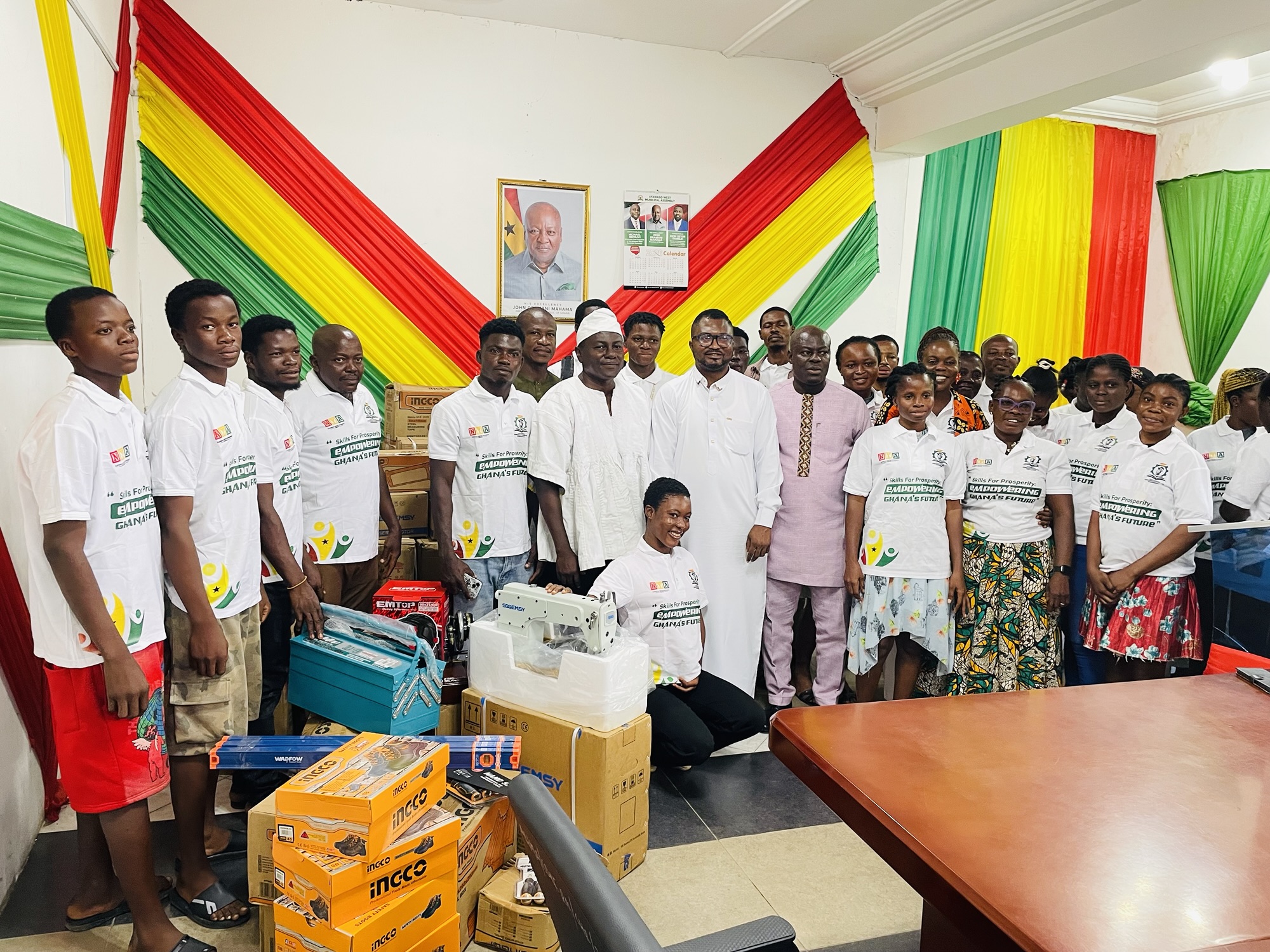

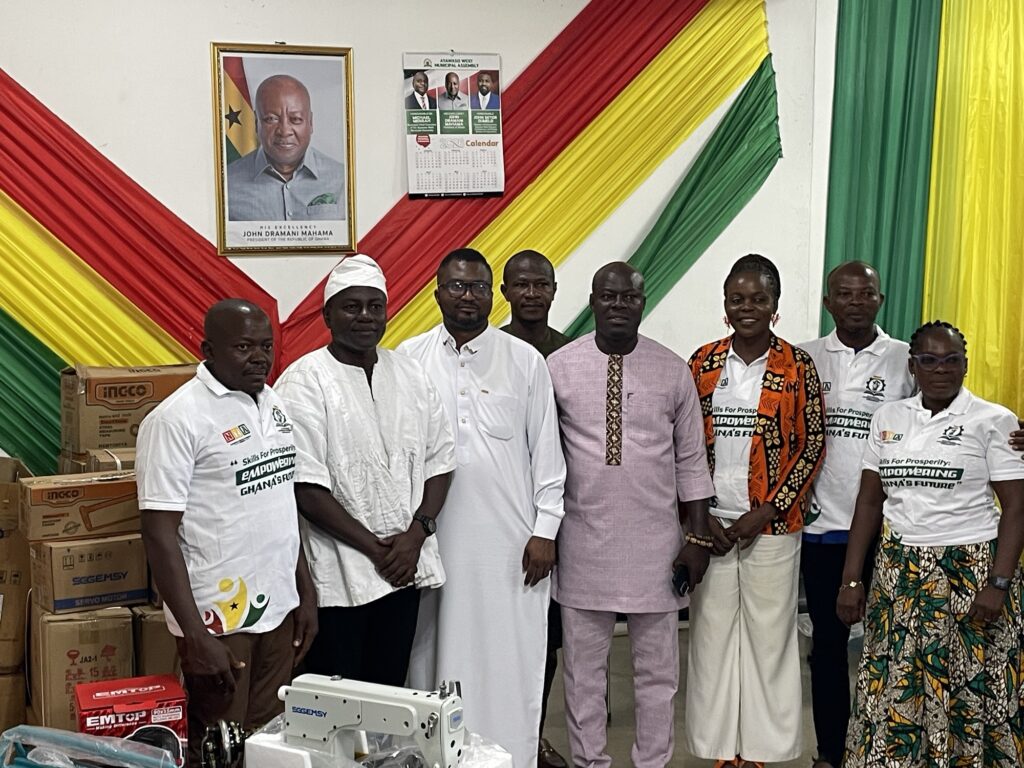
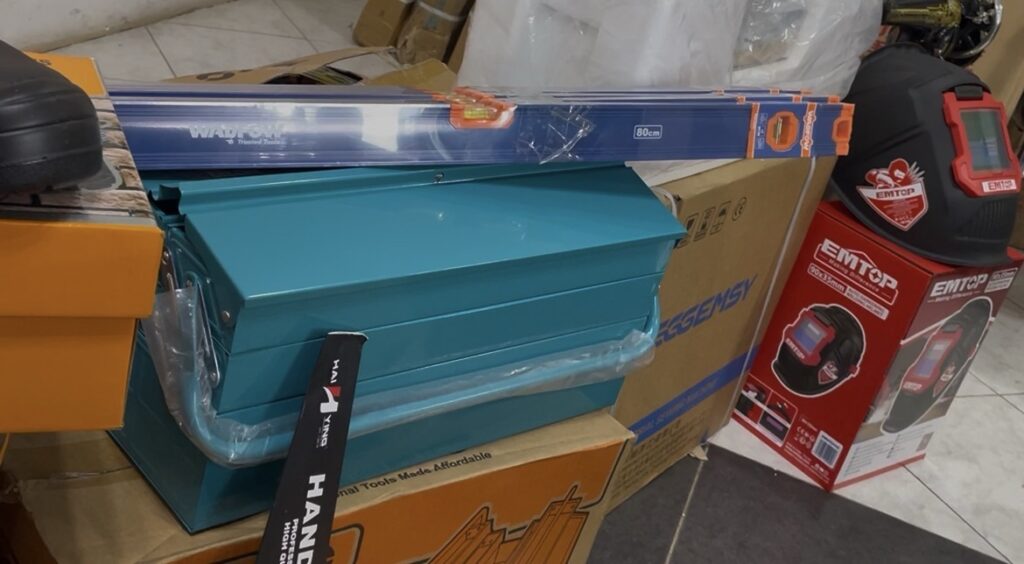
The Ayawaso West Municipal Assembly has taken a major step in advancing youth empowerment and vocational training by distributing essential tools to master craft persons and apprentices under the government’s National Apprenticeship Program.
The ceremony, held in the municipality, forms part of a nationwide rollout led by the administration of John Dramani Mahama. It brought together municipal and regional authorities, program coordinators, and the first group of beneficiaries made up of artisans and trainees.

Addressing the media, the YEA District Director, Mr. Theophilus Kodzo Bedzrah, described the initiative as a transformative milestone for skills development. He noted that beneficiaries of this phase are pioneers of a program expected to deliver long-term impact.

He stressed that the success of the initiative will depend on discipline, dedication, and strong collaboration between master craft persons and apprentices. According to him, the program is designed as a continuous intervention aimed at expanding access to vocational and technical training nationwide.
Mr. Bedzrah acknowledged that the current phase is only the beginning but assured that the program will grow through consistent monitoring, evaluation, and expansion to include more participants in subsequent phases.
The National Apprenticeship Program aligns with the government’s broader economic agenda, including the vision of a 24-hour economy that promotes productivity, job creation, and sustainable livelihoods. By investing in practical skills, the initiative seeks to empower young people to become self-reliant and contribute meaningfully to national development.
Training under the program typically lasts between six months and one year, depending on the trade. After each cycle, new groups of apprentices will be enrolled to ensure continuity.
Officials indicate that more than 100,000 people across the country have already registered, reflecting strong interest in vocational training. The program covers a range of trades such as dressmaking, beauty services, catering, and engineering.

In addition to hands-on training, beneficiaries receive tools and monthly stipends to support their learning. Authorities emphasized that these resources are funded by the public, making accountability and proper use essential.
Monitoring teams are expected to visit training centers regularly to ensure compliance with program guidelines and to educate both trainers and apprentices on their responsibilities. A code of conduct has also been established to promote professionalism and prevent exploitation.
Beneficiaries have been urged to remain committed and disciplined, while master craft persons are expected to provide quality training and safe working environments.
Mr. Bedzrah concluded by encouraging participants to take full advantage of the opportunity, noting that skills development remains a critical pathway to employment, economic growth, and long-term self-reliance.

Story by: Ernest Frimpong (0247220948) | Follow our social media handles @uktvghana | DM us for Ads on our website or any of our socials