
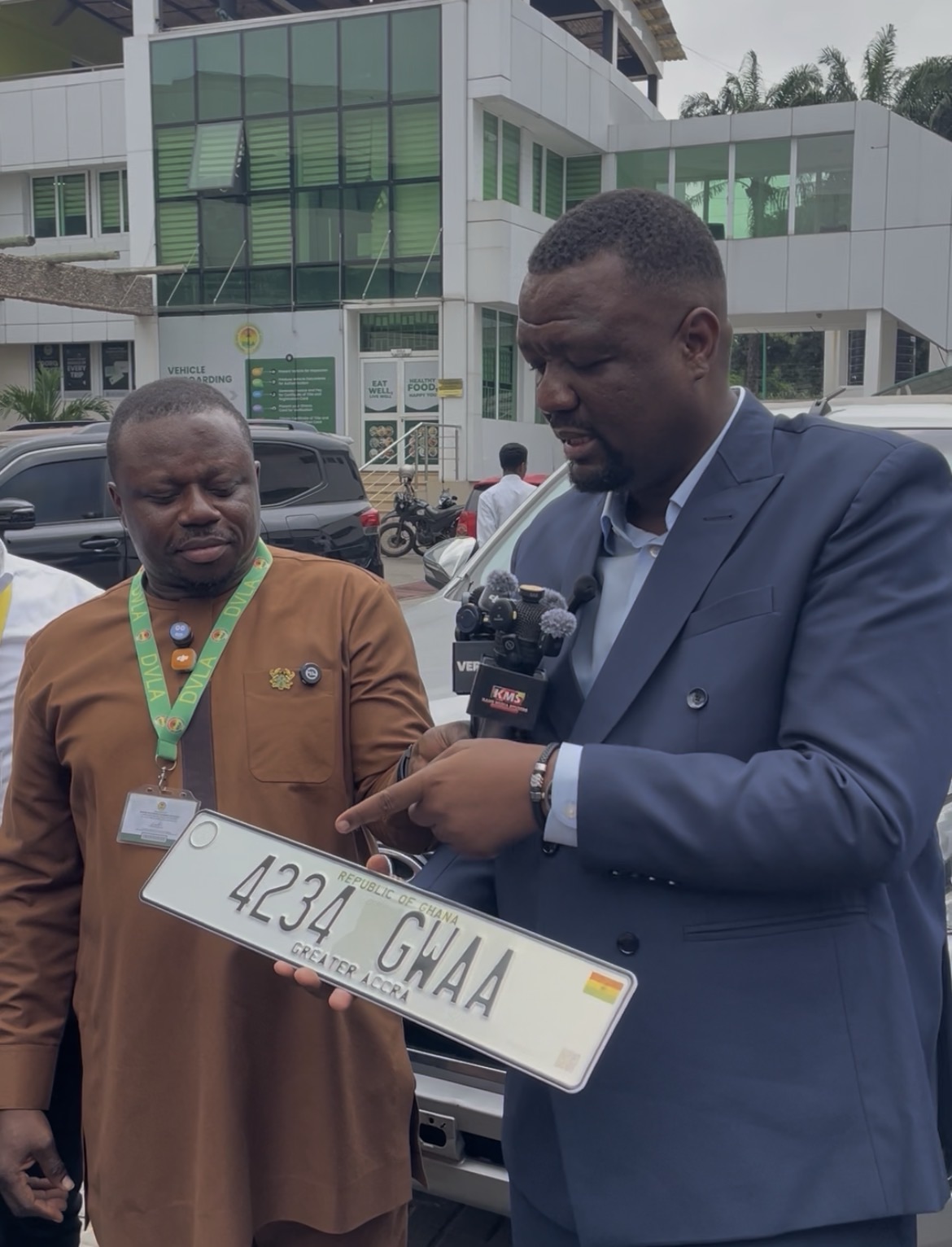

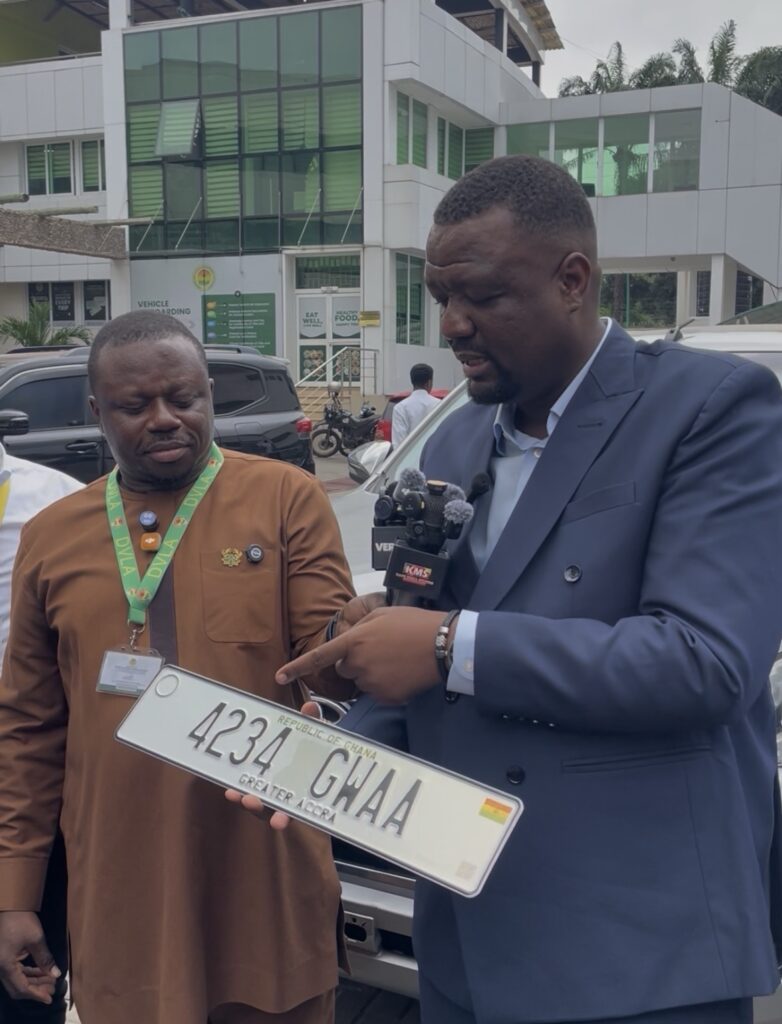
The Driver and Vehicle Licensing Authority (DVLA) has outlined plans to introduce a new generation of smart licence plates designed to strengthen vehicle registration, improve road safety and curb the misuse of vehicle number plates for criminal activities.
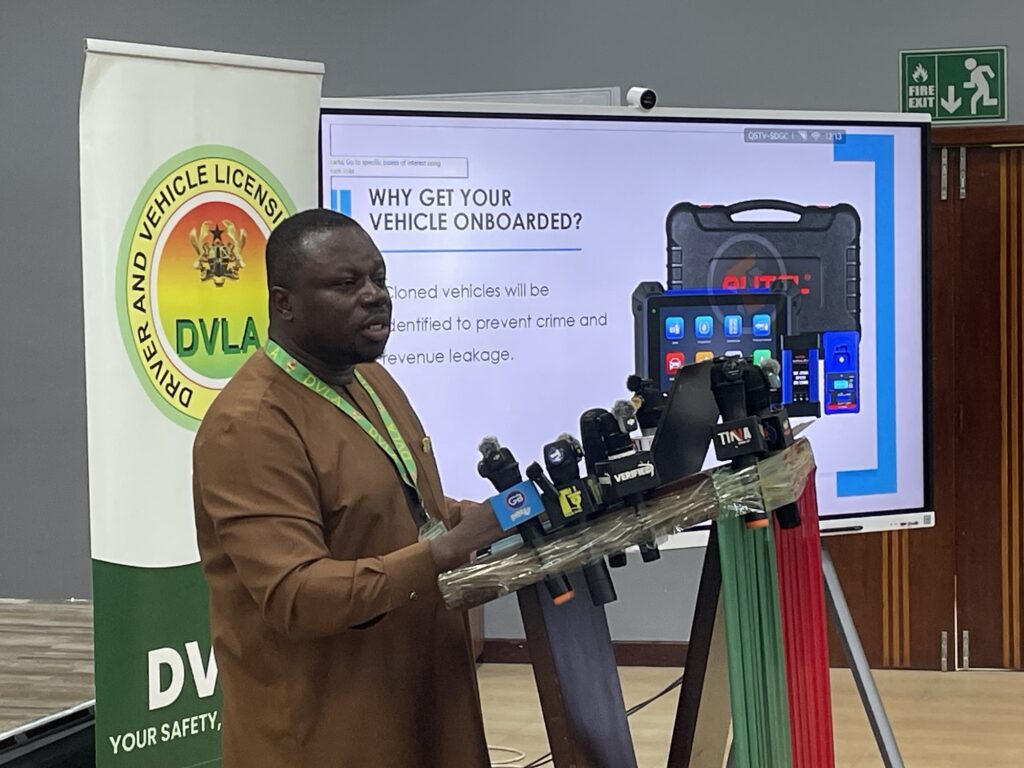
Speaking during the engagement with Bloggers, the Acting Director of Vehicle Inspection and Registration, DVLA, Mr Kwasi Bona Otuo Serebour, raised concerns about the ease with which vehicle licence plates are currently reproduced and sold by unauthorised persons.
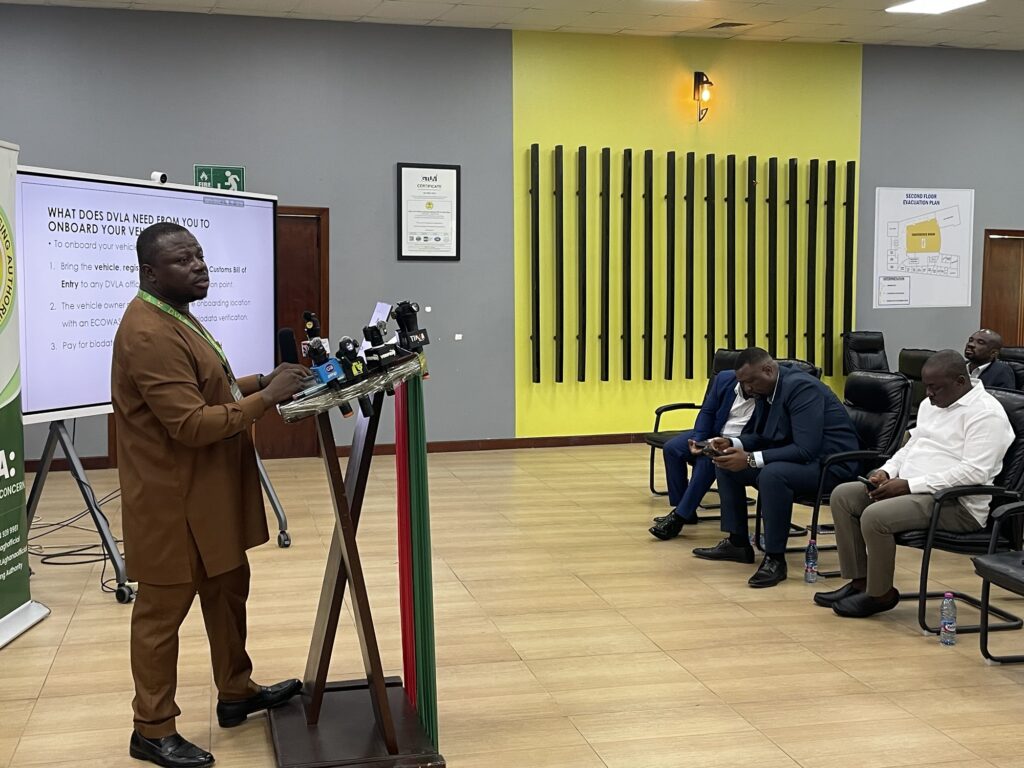
He cited instances where individuals have allegedly been arrested with multiple licence plates believed to have been intended for use in criminal activities.
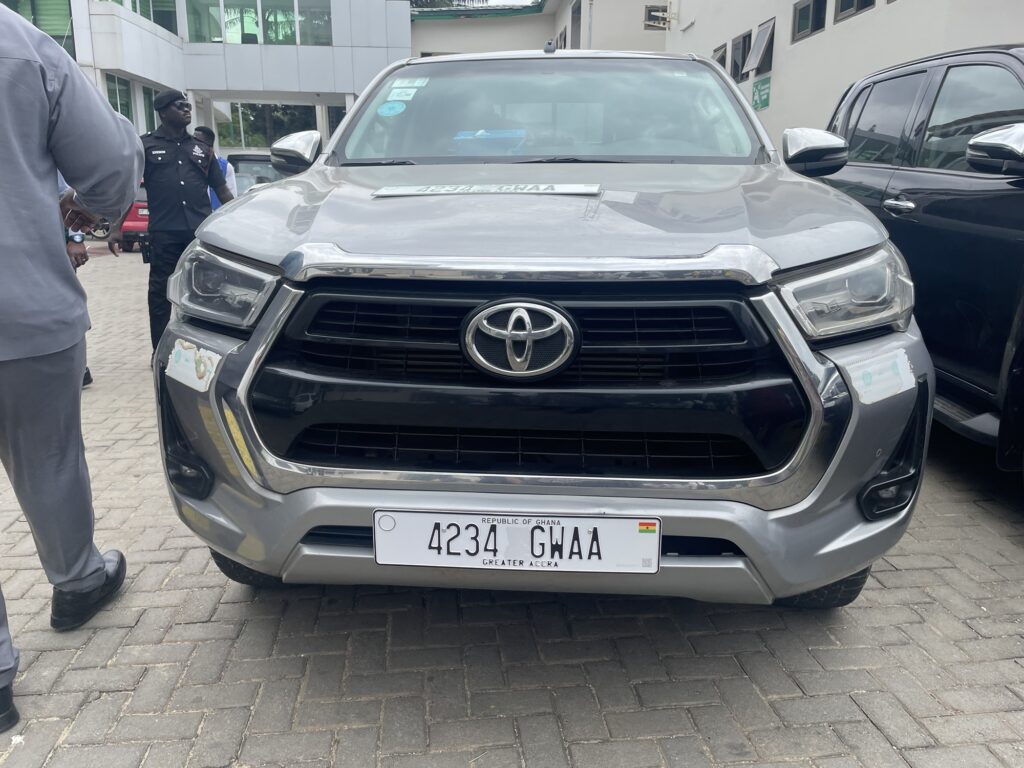
Mr. Kwasi Bona also recounted incidents in which motorists reportedly encountered other vehicles displaying the same registration numbers as theirs, describing the situation as a serious concern that could undermine public safety and the credibility of Ghana’s vehicle registration system.
According to him, cases have also emerged where motorists attempting to renew their insurance or roadworthy certificates have been informed that the processes had already been completed, despite having not initiated the renewals themselves.
He explained that such situations could occur when another vehicle is operating with a duplicated registration number.
New plates to feature RFID technology
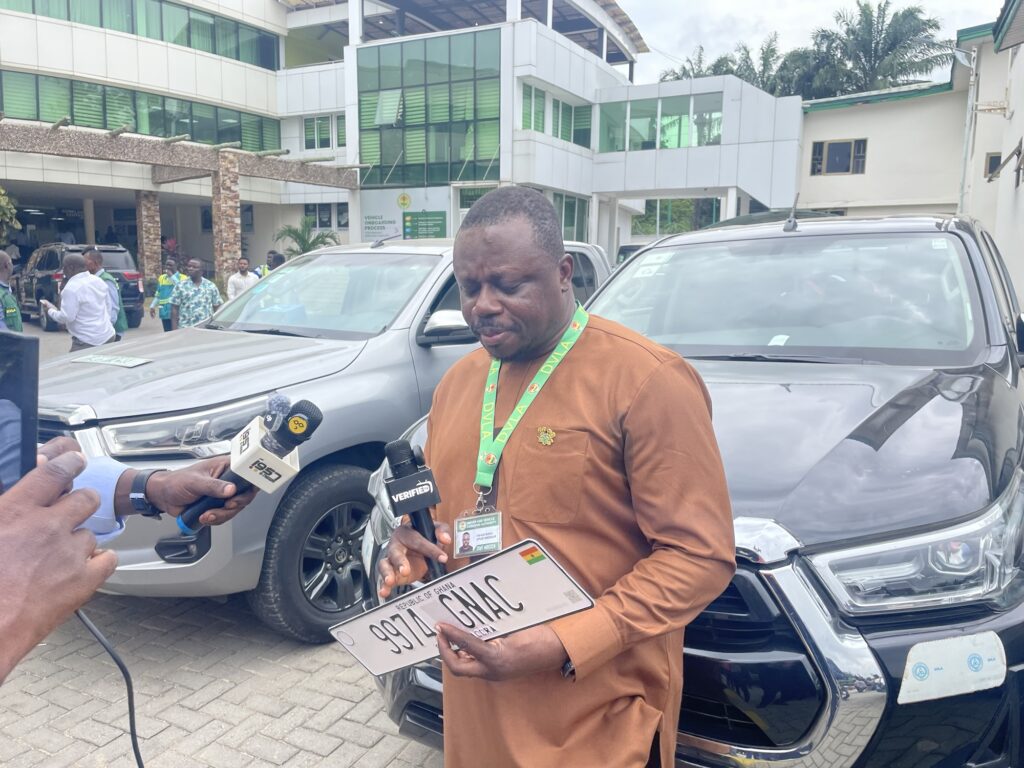
Mr. Bona said the new licence plates will contain Radio Frequency Identification (RFID) chips, which allows authorised systems to electronically identify vehicles and access relevant registration information.
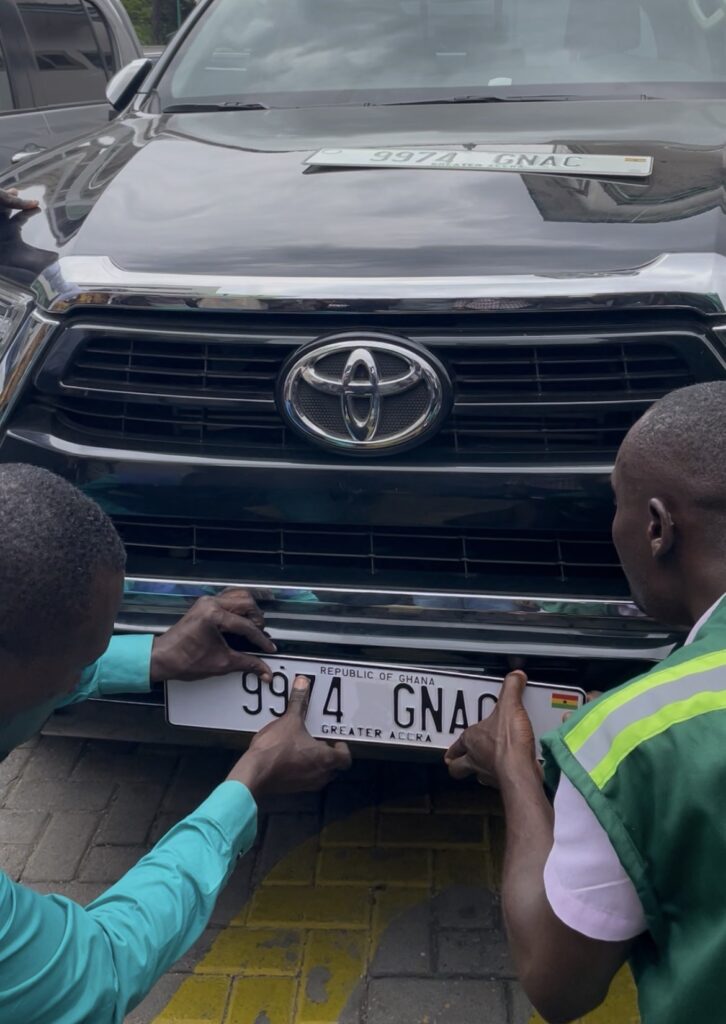
The plates will also feature tamper-resistant technology and one-time fasteners designed to make it difficult for criminals to remove and reuse them on other vehicles.
He said the RFID system will work with permanent roadside readers, tripod-mounted readers and handheld devices used by compliance officers.

These systems, he explained, could enable authorities to identify vehicles and detect issues such as expired registration, insurance or roadworthiness requirements without necessarily stopping every vehicle.
The new system is also expected to connect with relevant databases, including police and international databases, to help prevent the registration of stolen vehicles.
DVLA moves towards digital vehicle records
Mr. Bona said the DVLA is also seeking to move away from the extensive use of paper records, particularly documents dating back to the manual registration processes used over the years.
He noted that old vehicle records containing forms, photographs and other documents are increasingly difficult to preserve due to issues including mould, water damage, rodents and limited storage space.
He said digitisation would provide a more efficient way of storing and accessing vehicle registration information while reducing the need for additional physical storage facilities.

Vehicle ownership and identification
Under the proposed system, the DVLA intends to strengthen the identification of vehicle owners by using the Ghana Card as the primary means of verifying the identity of registered owners.
Mr. Bona explained that earlier vehicle registration processes accepted various forms of identification because the National Identification Authority’s database was not available at the time.
He said the new system would help the DVLA establish more accurate ownership records and improve the integrity of the national vehicle database.
Licence plates to be assigned to owners
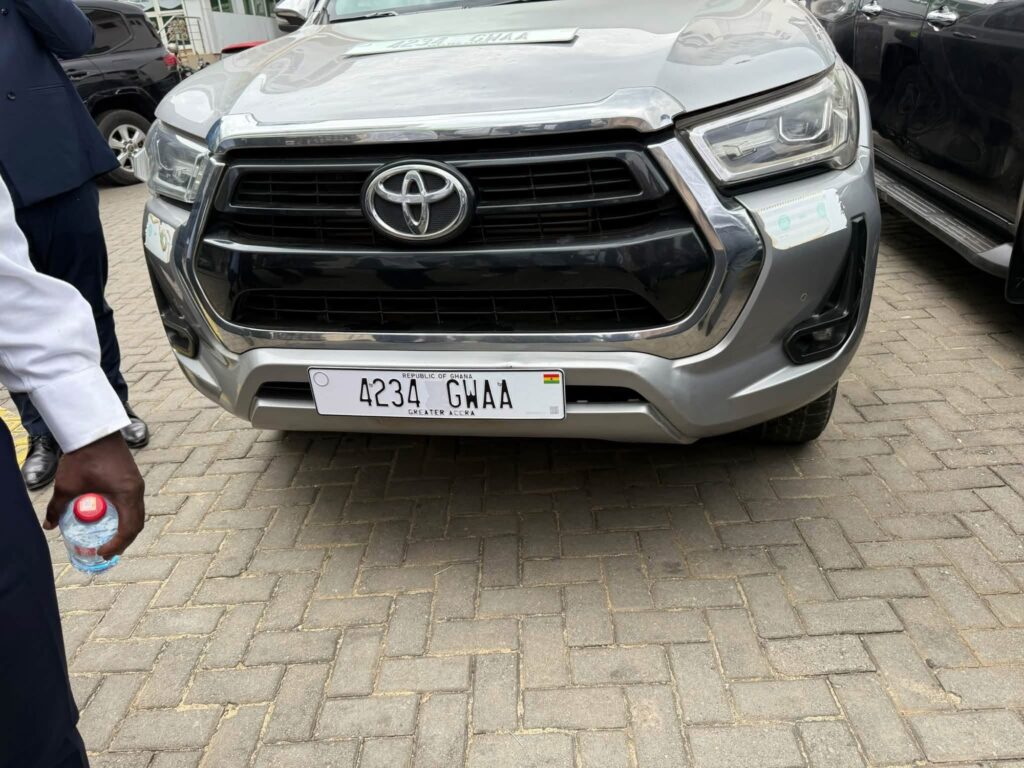
One of the changes highlighted in the presentation is that licence numbers will be associated with vehicle owners rather than permanently remaining with a particular vehicle.
When a vehicle is sold, the plate will be removed and the ownership transfer processed before a new plate is issued to the buyer.
The registration number may subsequently be assigned to another vehicle owned by the same person within the applicable category.
Mr. Bona explained that a registration number that remains inactive for five years could eventually return to the pool for reassignment.
He also clarified that while the registration number may be assigned to an individual, the physical licence plate remains the property of the Republic of Ghana.
Biennial renewal of vehicle registration
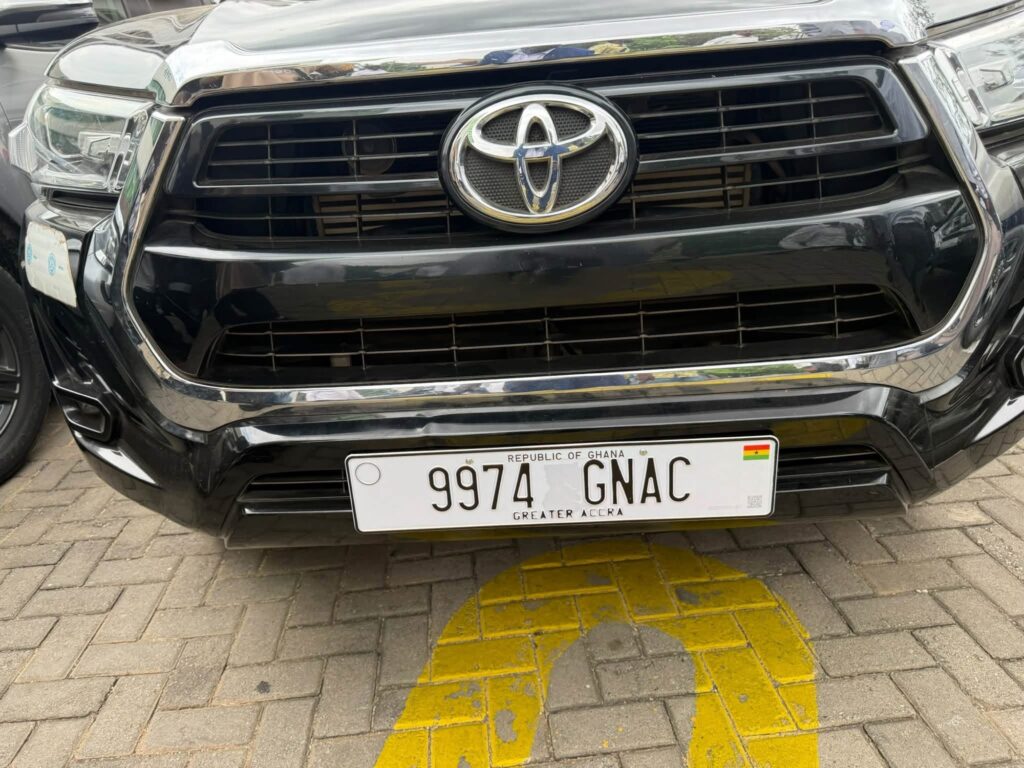
The new system will also support the enforcement of the legal requirement for motorists to renew their vehicle registration every two years.
According to Mr. Bona, the biennial renewal process will enable authorities to maintain an accurate database of vehicles currently operating in the country.
He explained that some vehicles may leave the country, be involved in accidents or become permanently unusable without the DVLA being formally notified, resulting in inaccurate records.
Regular renewal, he said, would therefore help authorities establish more reliable statistics for planning transportation infrastructure and other related policies.
New registration numbering system
Mr. Bona further explained that the new licence plates will carry a combination of numbers and letters.
The numerical portion will be randomly generated by the system, while the first two letters will identify the registration centre. The remaining letters will be randomly assigned.
Motorists will, however, still have the opportunity to apply and pay for special registration numbers or preferred letter combinations where available.
The plates will also indicate the region of registration at the lower section.
Different plates for different vehicle categories
The presentation also highlighted new plate designs for different categories of vehicles, including private vehicles, commercial vehicles, government vehicles, electric vehicles, diplomatic vehicles, international organisations, trailers, heavy equipment and motorcycles.
Electric vehicles will have a distinctive green marking, while trailers will receive a separate category of registration plates.
Mr. Bona said the separate registration of trailers is expected to begin from next year, in line with the relevant legal and regulatory framework.
The DVLA says the new smart licence plate system is intended to create a more credible vehicle registration database, strengthen enforcement, improve public safety and bring Ghana’s vehicle registration system closer to international standards.
Story by: Ernest Frimpong (0247220948) | Follow our social media handles @uktvghana | DM us for Ads on our website or any of our socials