
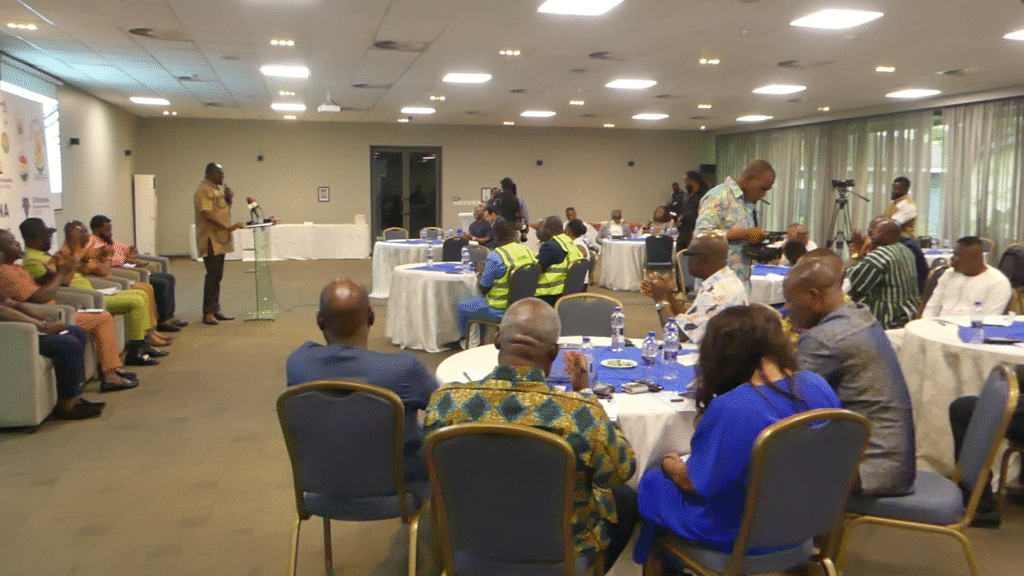
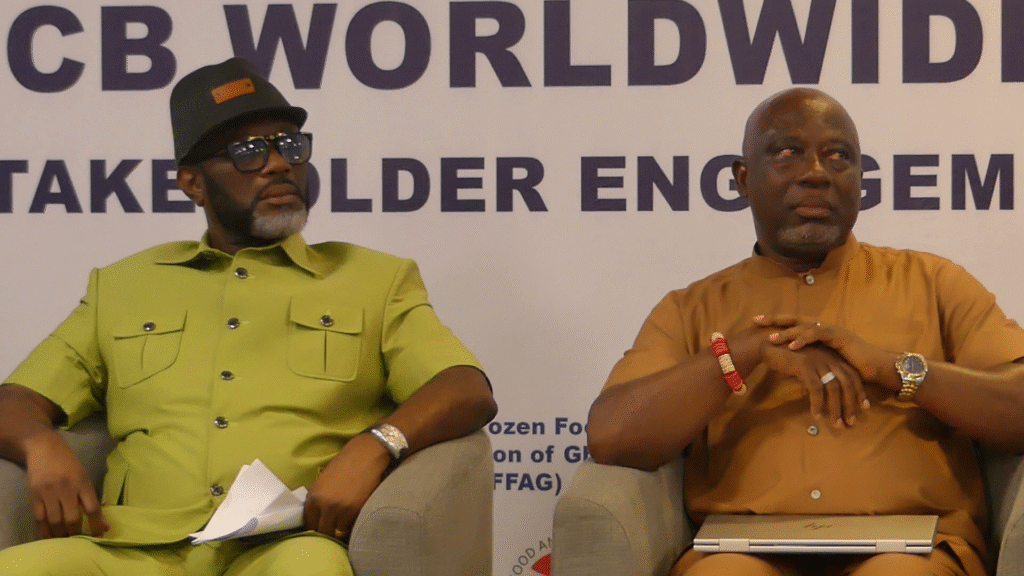
At the LCB Worldwide Ghana Stakeholder Engagement meeting on cross‑border health security, Mr. Fiifi Buabeng‑Baiden presented a four‑pillar roadmap for the country’s new national disinfection service. The pillars are:
(1) defining the service’s mandate,
(2) validating and rolling out processes,
(3) addressing stakeholder concerns, and
(4) gathering feedback for continuous improvement.
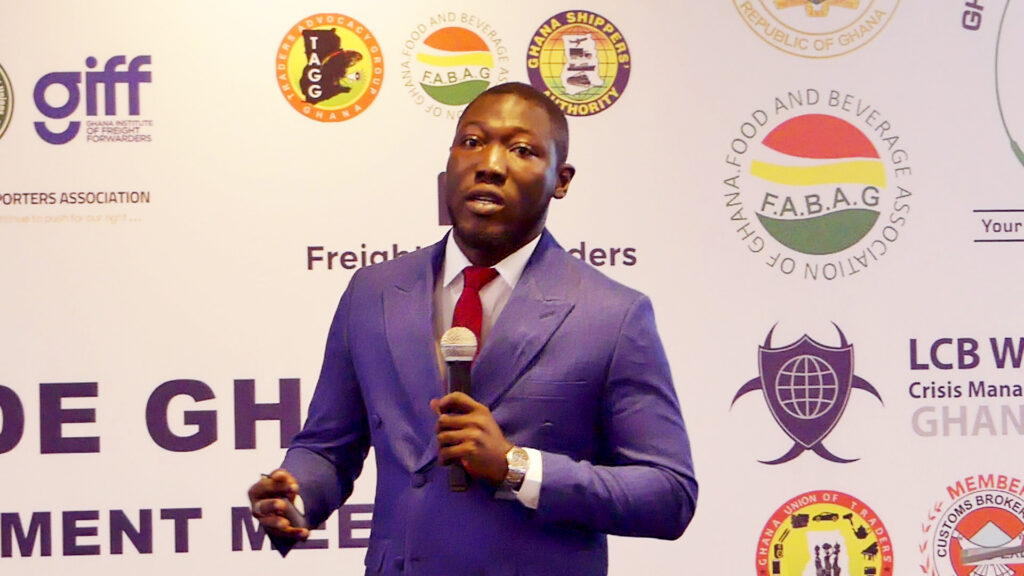
Mr. Buabeng‑Baiden emphasized the need to explain the procedures to partners so the public can see tangible benefits, and he reaffirmed Ghana’s commitment to safe public health. While trade fuels jobs and economic growth, it also creates pathways for pathogen spread, he warned, calling for new partnerships to sustain the programme.
Challenges and Solutions
Drawing on his experience during the COVID‑19 lockdown, he described how contaminated cargo disrupted global supply chains. Citing contamination rates from shipments from China and Kenya, he argued that robust disinfection at points of entry is essential. Ghana’s adherence to WHO International Health Regulations and its de‑contamination protocols were highlighted as key to managing these risks, along with the need for dedicated facilities, proper equipment and trained staff.
Costs and Implementation
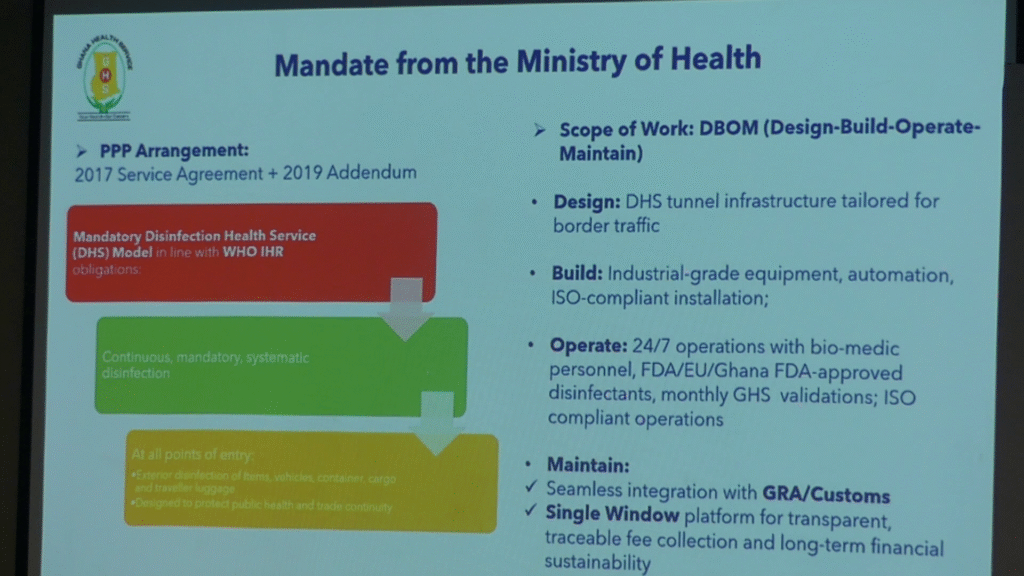
Although partial implementation can be costly elsewhere, Ghana has achieved full coverage through a partnership with the LCB Worldwide. A 2017 service agreement, amended in 2019, guides the rollout, and seamless integration with trade logistics is crucial to avoid disruptions.
Global Standards and Certification
The service meets internationally recognised ISO standards for quality, environmental management, worker safety and operational reliability. Strategic alliances with global health bodies ensure continuous oversight by the Ghana Health Service, while investment in digital tracing systems and a skilled workforce underpins credibility.
Research, Development and Economic Impact
Continuous R&D is vital as antibiotic‑resistant pathogens evolve. LCB’s work on improved chemicals and processes aims to keep the service effective, contributing to a decline in monkeypox cases. Economically, the programme helped Ghana avoid steep logistical losses during the pandemic, with port volumes rising despite global shutdowns and GDP loss remaining modest compared with many nations.
Community Engagement and Future Preparedness
The disinfection team has extended its work to markets and schools, reinforcing community trust. Looking ahead, Mr. Buabeng‑Baiden warned that pandemics are unpredictable and that preventative measures are the most reliable defence. He thanked partners and called for sustained collaboration to keep both public health and the economy secure.
Story by: Ernest Frimpong