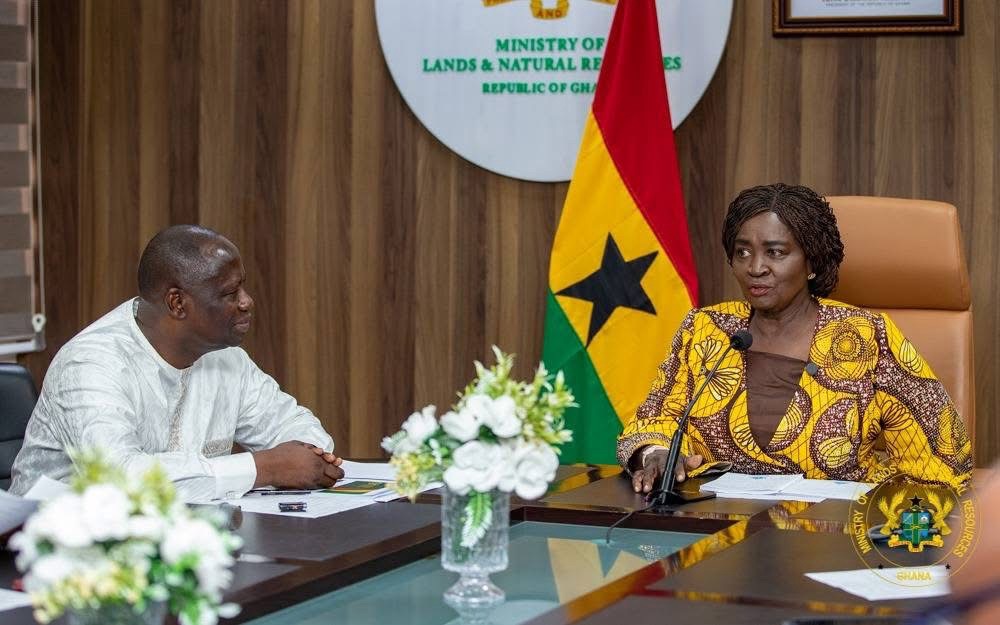

The Vice President of the Republic, Professor Jane Naana Opoku-Agyemang, has commended the Ministry of Lands and Natural Resources for what she described as encouraging progress in the management of the country’s land, natural resources, and environmental protection efforts.
Speaking during an engagement with management and staff of the Ministry, the Vice President expressed appreciation to the Honourable Minister and his team for the work they have done so far, noting that the story presented to her delegation was a positive one with strong potential for even greater impact.
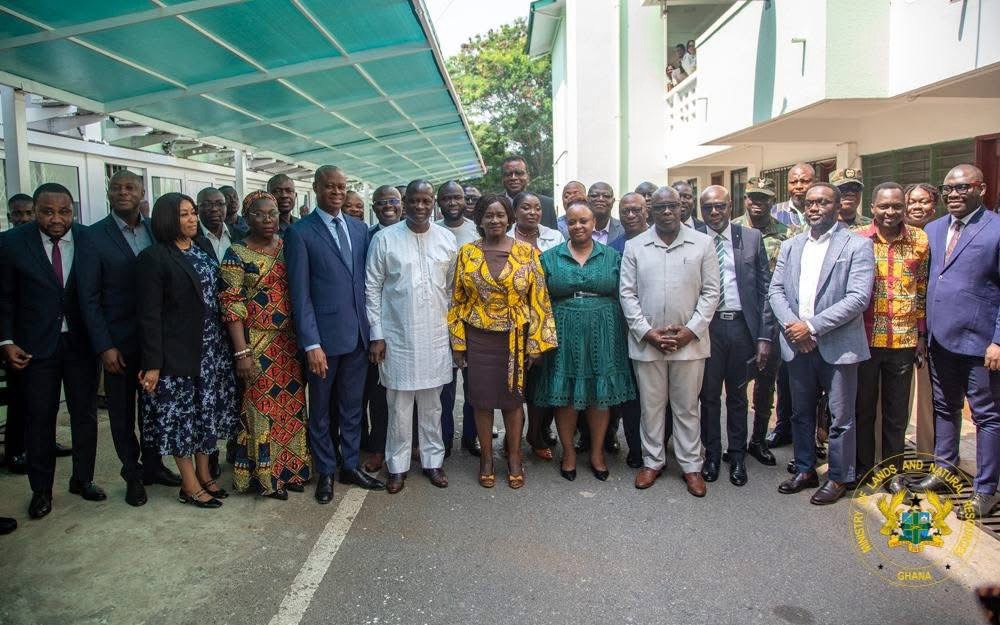
“The story you have shared with us today is a good one, and we believe it can only get better,” she said, adding that the briefing had been insightful not only for her team but also, she hoped, for those who contributed to the work being reviewed.
Professor Opoku-Agyemang explained that the visit formed part of efforts to ensure alignment across government institutions. According to her, while different agencies may operate at varying levels, it is essential that all stakeholders work toward the same national objectives.
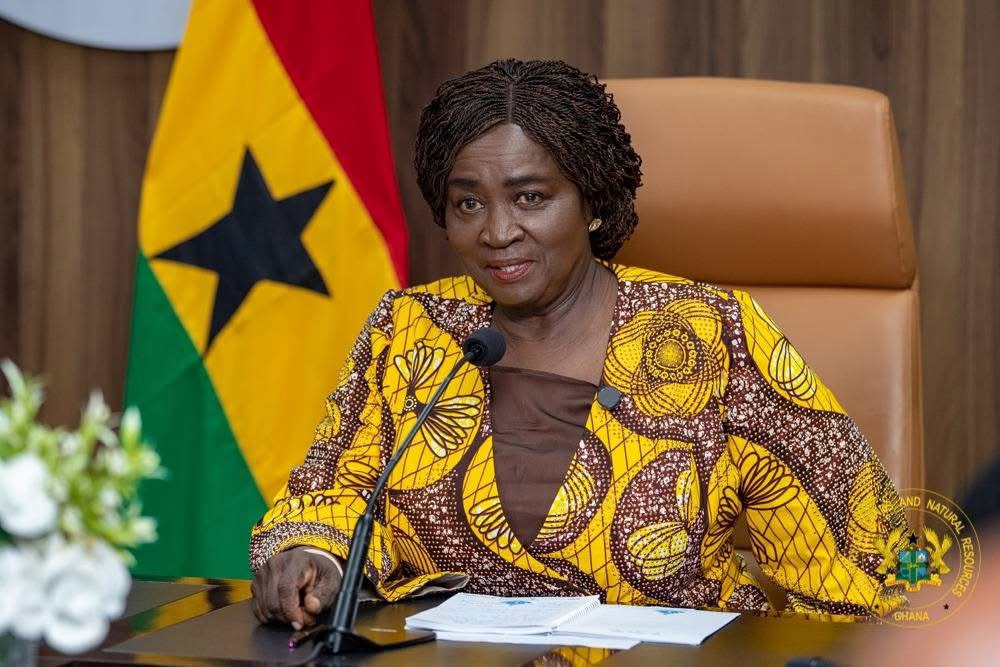
“We are here to ensure that we are aligned and moving in the same direction,” she noted.
She underscored the critical role of the Ministry of Lands and Natural Resources, emphasizing that land remains central to all forms of life and economic activity. Whether through agriculture, mining, forestry, water bodies, or airspace, she said, every citizen is directly or indirectly affected by decisions taken within the Ministry.
“What you do here affects lives in very direct and tangible ways,” the Vice President stated. “For that reason, you deserve all the support necessary to ensure that the good work you are doing becomes even better.”
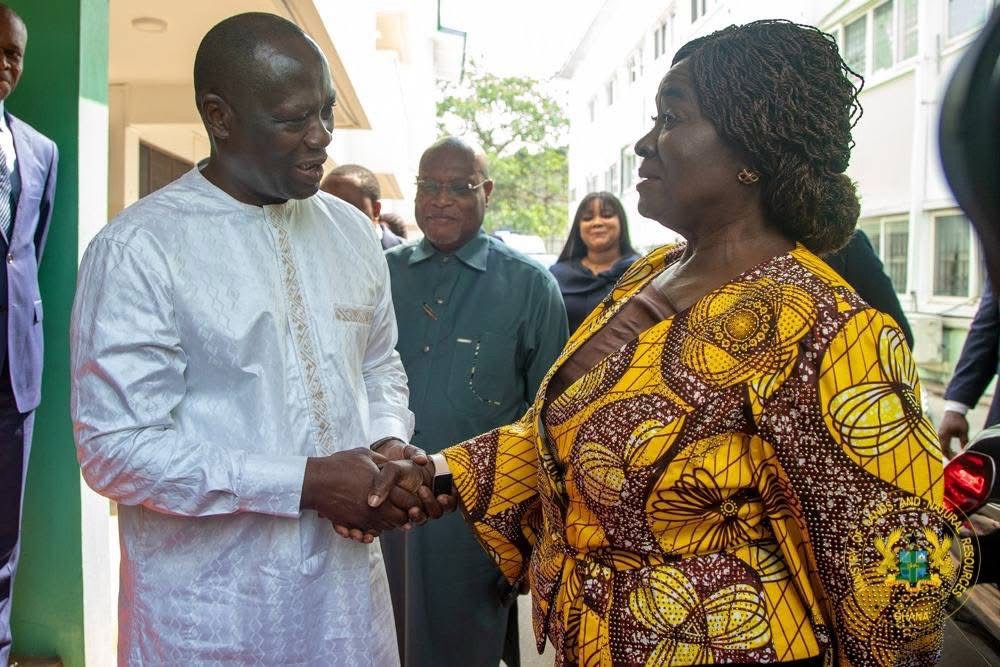
Acknowledging the broad scope of the Ministry’s mandate, Professor Opoku-Agyemang said managing lands, natural resources, and the environment places a heavy responsibility on the sector, but expressed confidence in the leadership and staff to deliver.
“Our role is to encourage you, to commend you for what you have achieved so far, and to urge you to do even more. We want you to know that we trust you and that we stand with you every step of the way,” she assured.
She further stressed the importance of direct engagement with institutions beyond the submission of reports, noting that face-to-face interactions help strengthen collaboration and morale.
“It matters that we come to you in person, to put faces to names, and to remind you that we are not distant observers receiving reports from faceless offices,” she said, adding that many others outside the meeting room also contribute to the Ministry’s success.
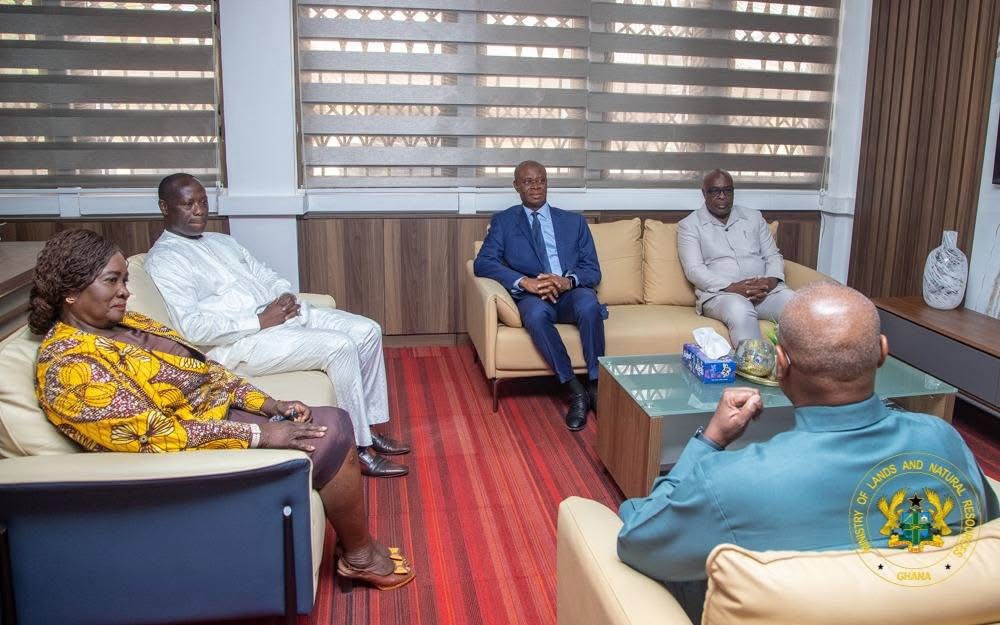
The Vice President said she had taken keen interest in the Ministry’s interventions, including its five-pronged strategy to address land degradation and environmental damage. She described the scale of degradation, sometimes measured in the equivalent of football fields, as alarming but acknowledged the significant gains being made through land retrieval and reclamation efforts.
“These are important success stories, and we encourage you to continue and expand this work,” she urged.
Professor Opoku-Agyemang emphasized that environmental reclamation goes beyond moral responsibility and directly affects national survival. She cautioned against prioritizing short-term financial gains over human life and environmental sustainability.
“No amount of money can justify the human suffering caused by environmental destruction,” she said, stressing that protecting the environment ultimately means protecting lives.
She also praised efforts to strengthen enforcement mechanisms, improve coordination, and establish dedicated teams to tackle environmental challenges, noting that such measures benefit both present and future generations.
Touching on digitization, the Vice President highlighted the need for improved data management and access to records, describing it as essential for transparency, efficiency, and accountability in land administration.
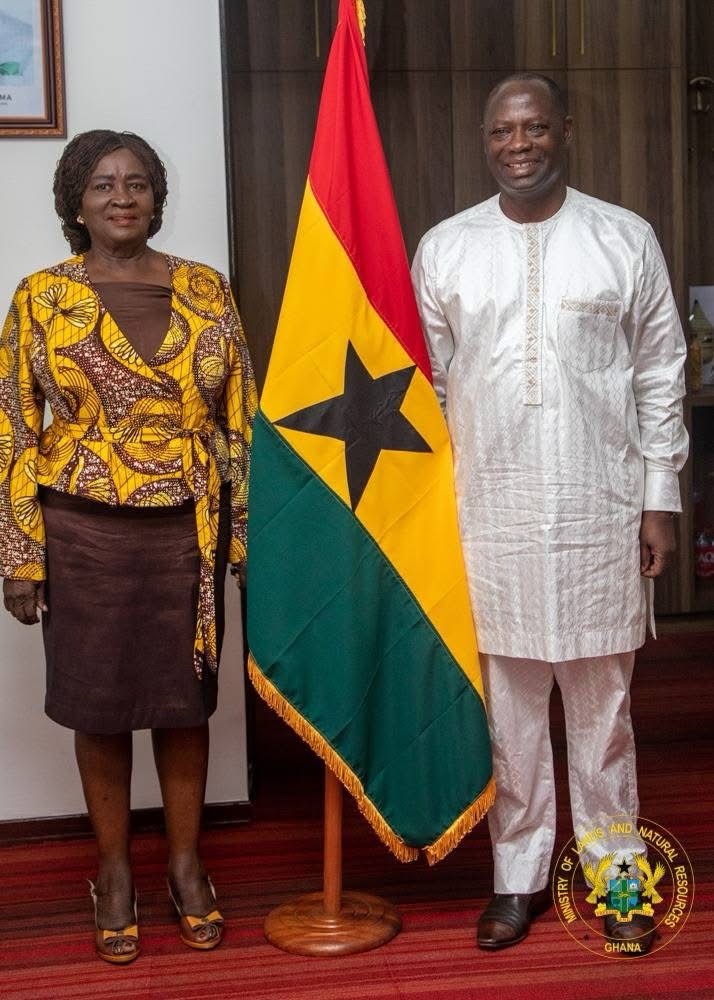
In addition, she made a special appeal for gender inclusion in the implementation of land bank initiatives. She observed that many women are eager to engage in farming and other productive ventures but are constrained by limited access to land.
“As we develop land banks, we must be intentional about including women,” she said. “Providing them access to land will enable them to contribute meaningfully to the economy and national development.”
In her concluding remarks, Professor Opoku-Agyemang reiterated the importance of decentralization, describing it as a practical governance tool rather than a political slogan.
“Decentralization brings decision-making closer to the people and helps solve problems at the grassroots level,” she said.
She ended by commending the Ministry once again for its efforts and encouraged continued dedication to sustainable land and environmental management.
Story by: Ernest Frimpong (0247220948) | Follow our social media platforms: @uktvghana