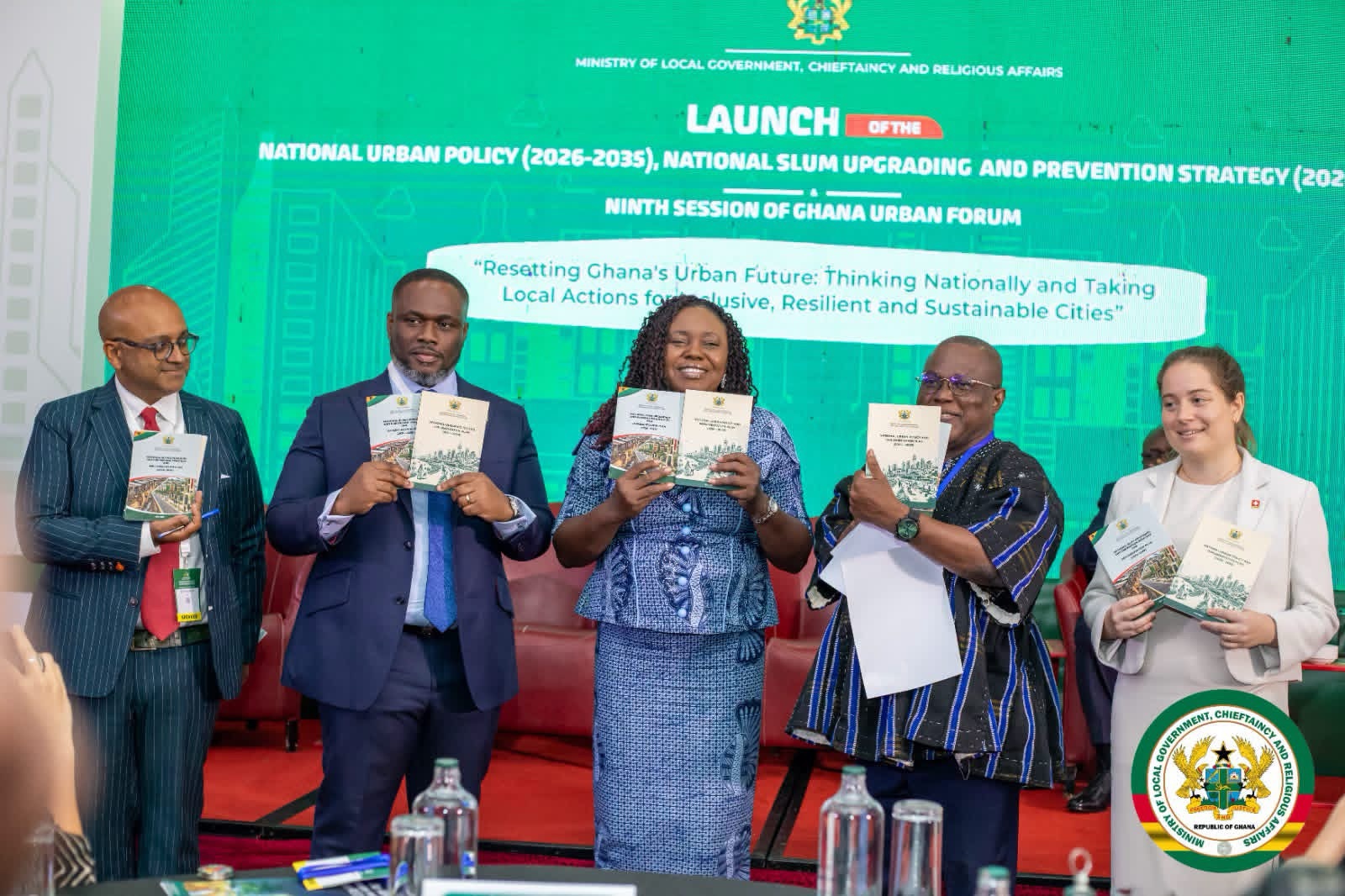

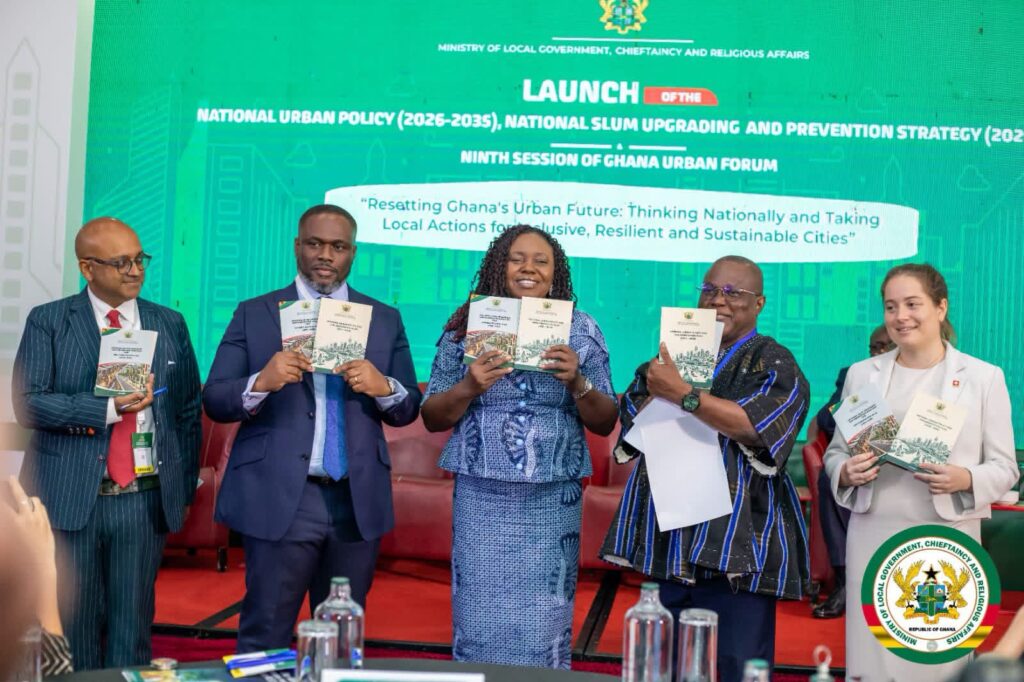
The Government of Ghana has officially launched the National Urban Policy and Implementation Plan (2026–2035) together with the National Slum Upgrading and Prevention Strategy (2026–2035), setting a new direction for the country’s urban development agenda over the next decade.
The two policy frameworks are expected to guide efforts to build more inclusive, resilient, well-planned and sustainable cities while addressing the growing challenges associated with rapid urbanisation.
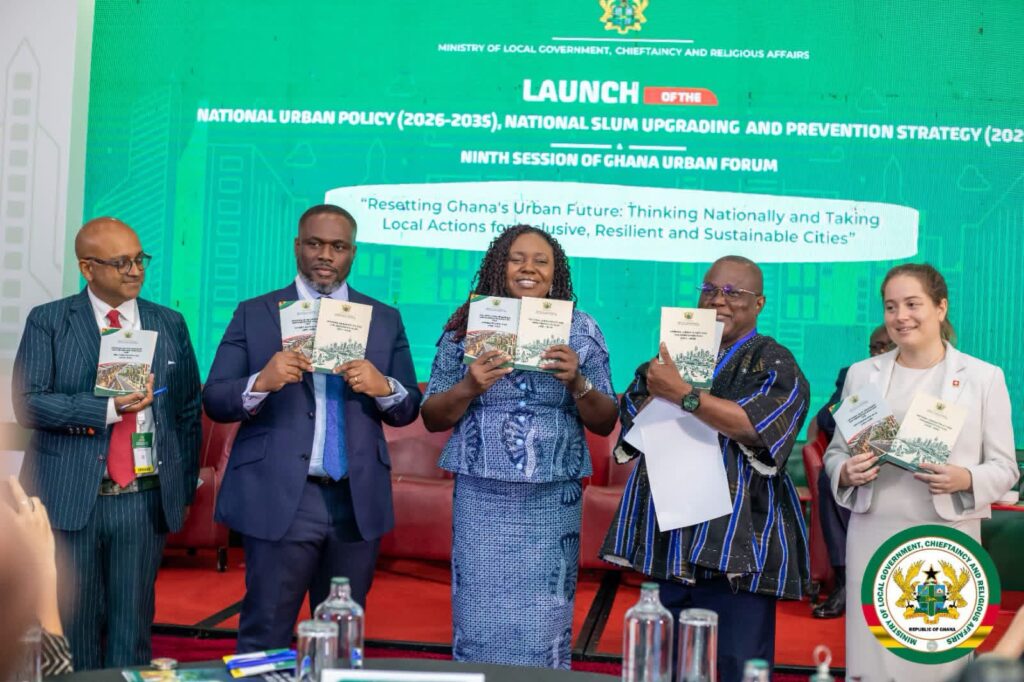
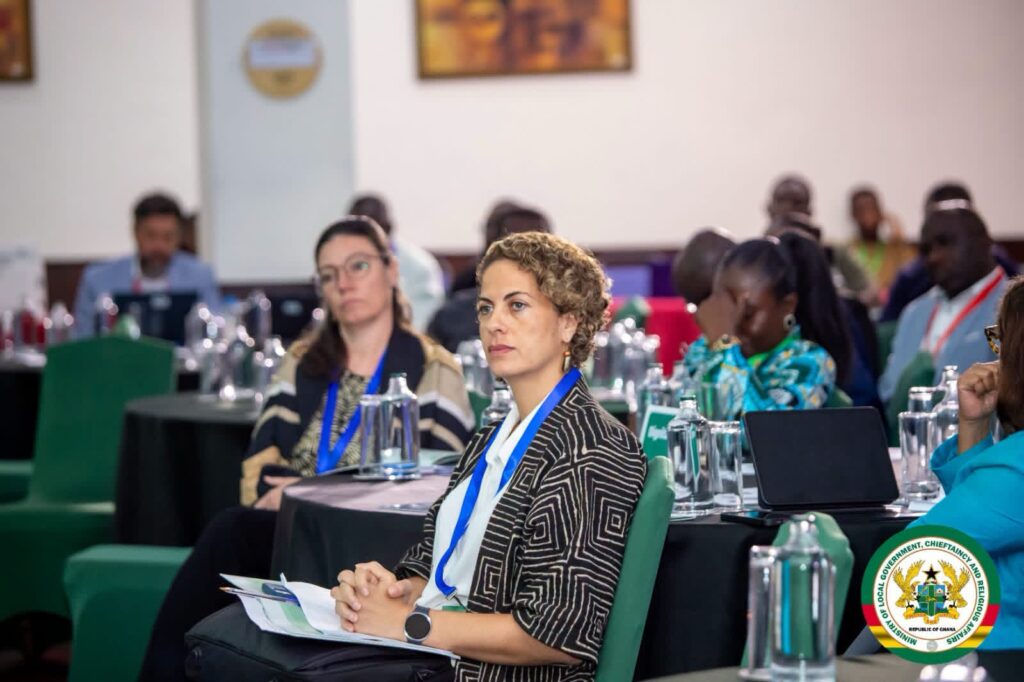
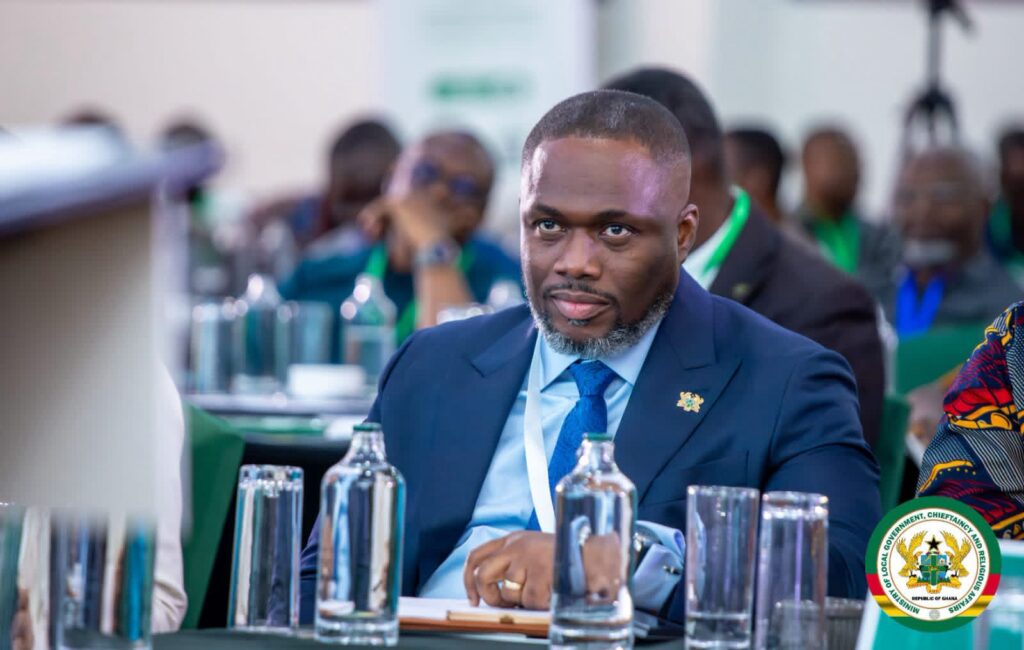
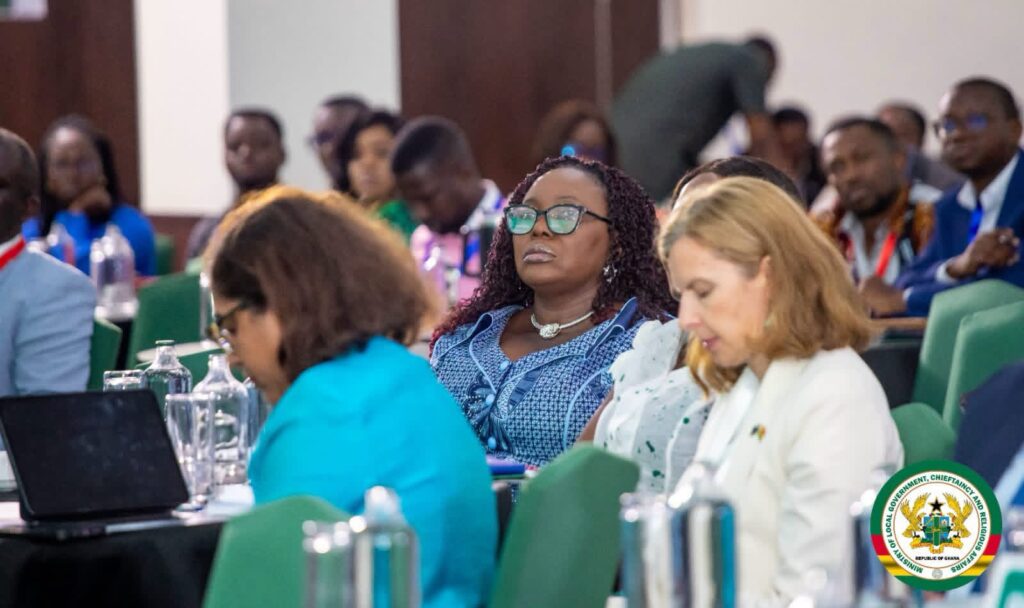
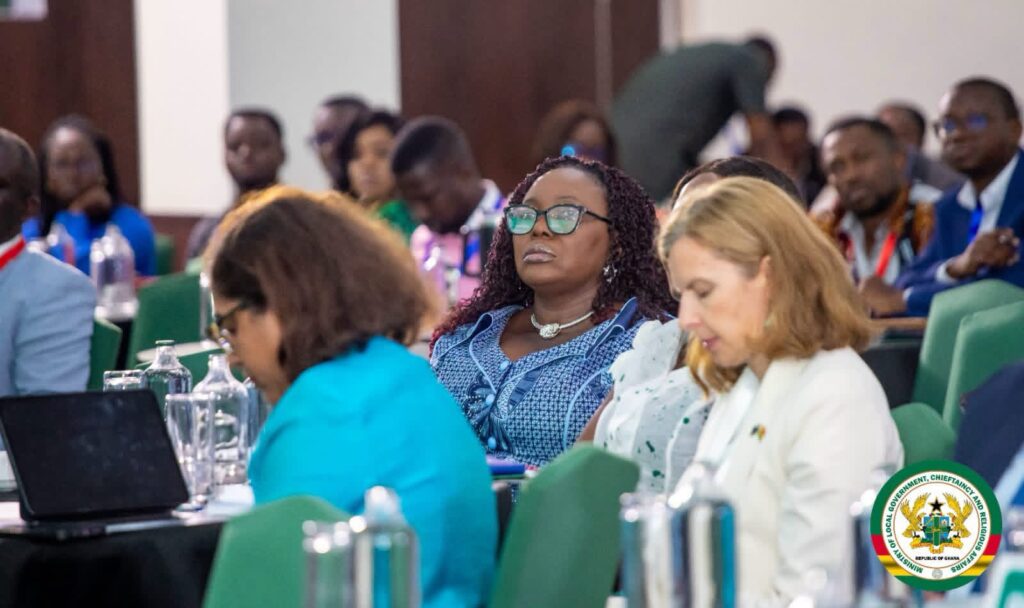
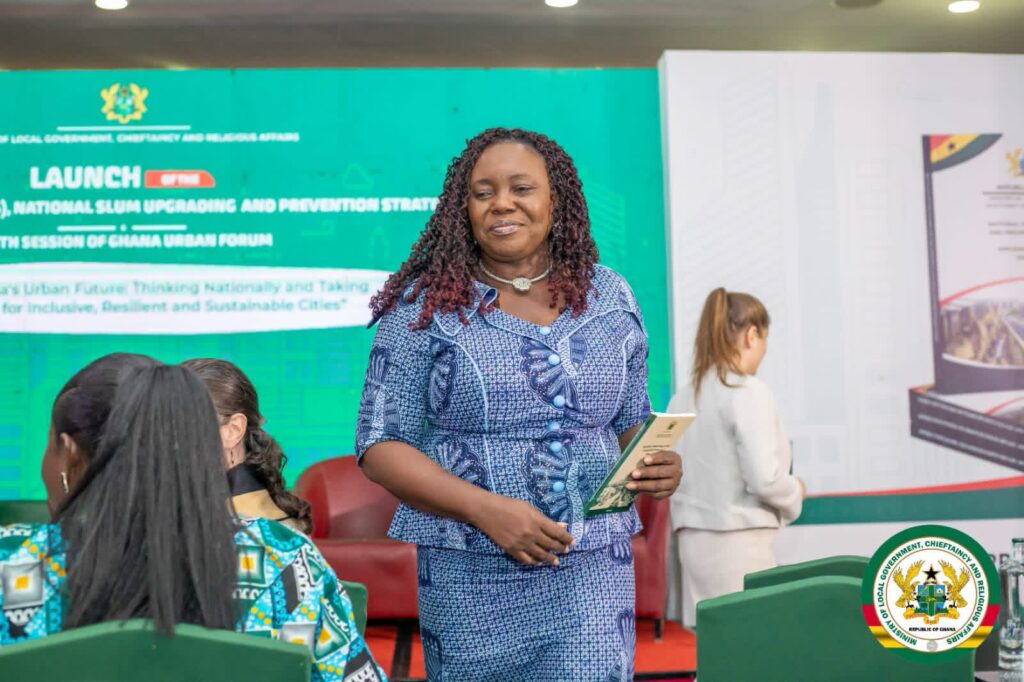
The launch was held during the Ninth Session of the Ghana Urban Forum under the theme, “Resetting Ghana’s Urban Future: Thinking Nationally and Taking Local Actions for Inclusive, Resilient and Sustainable Cities.” The event brought together government officials, development partners, local government authorities, urban planners, traditional leaders, civil society organisations and other stakeholders committed to shaping the future of Ghana’s cities.
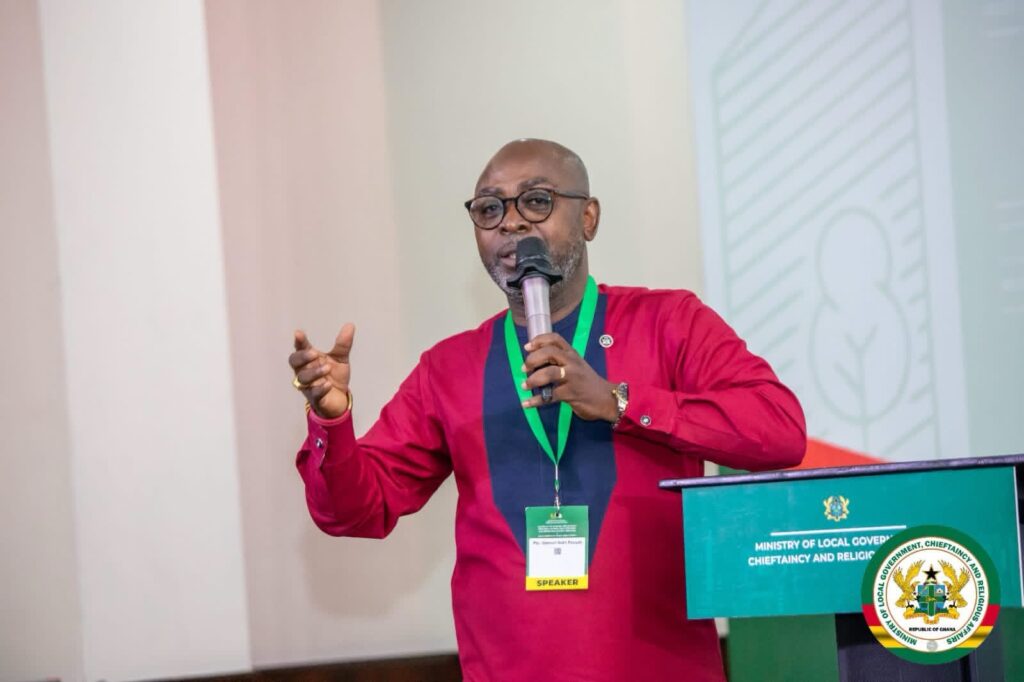
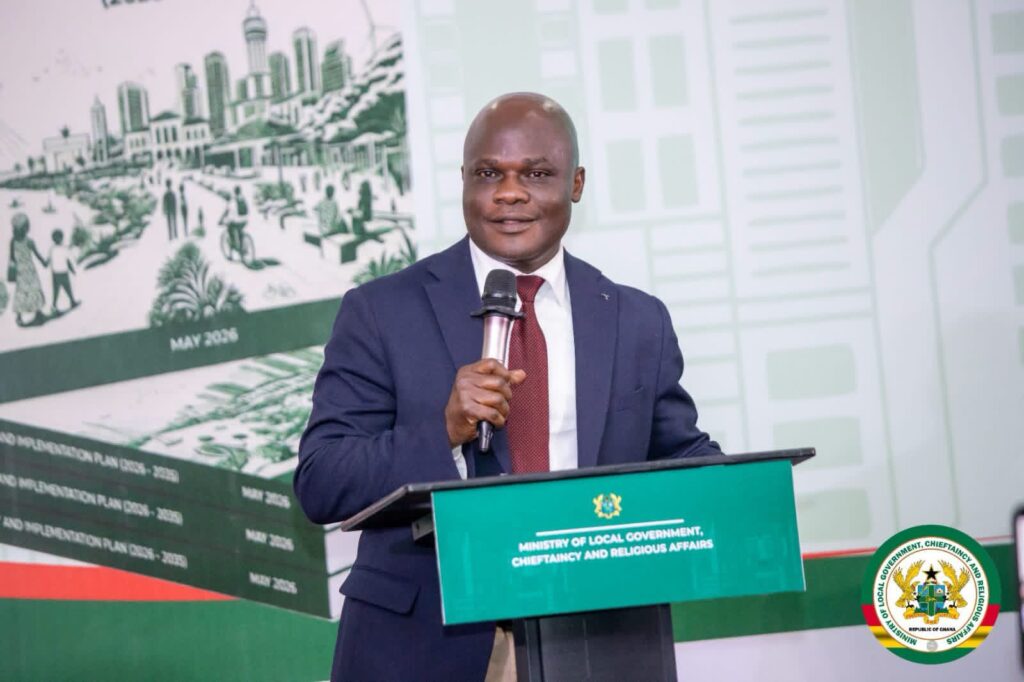
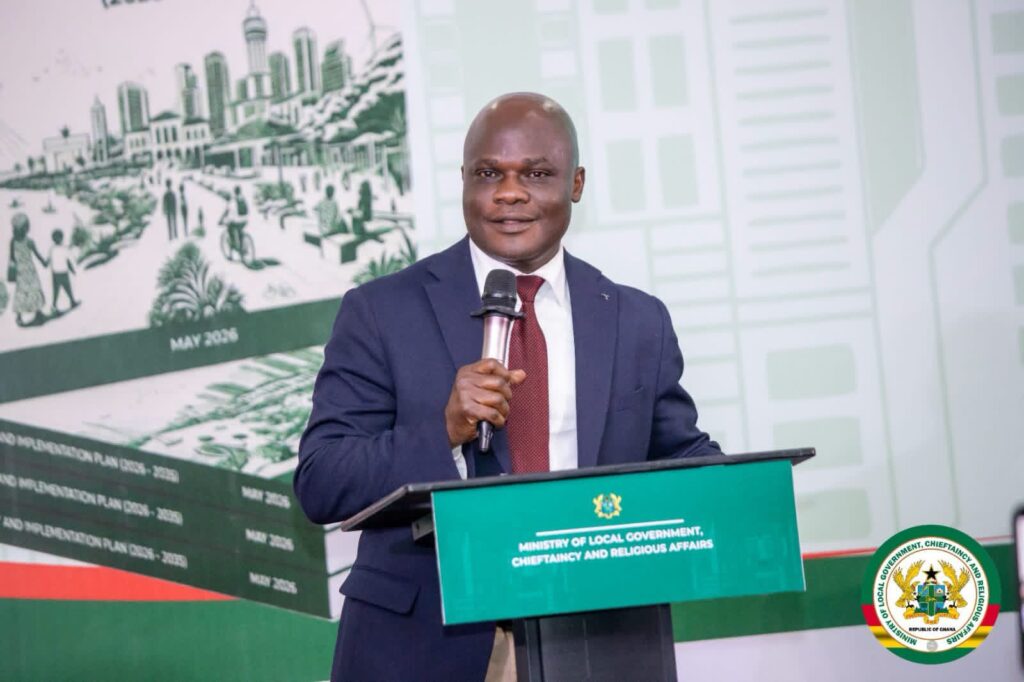
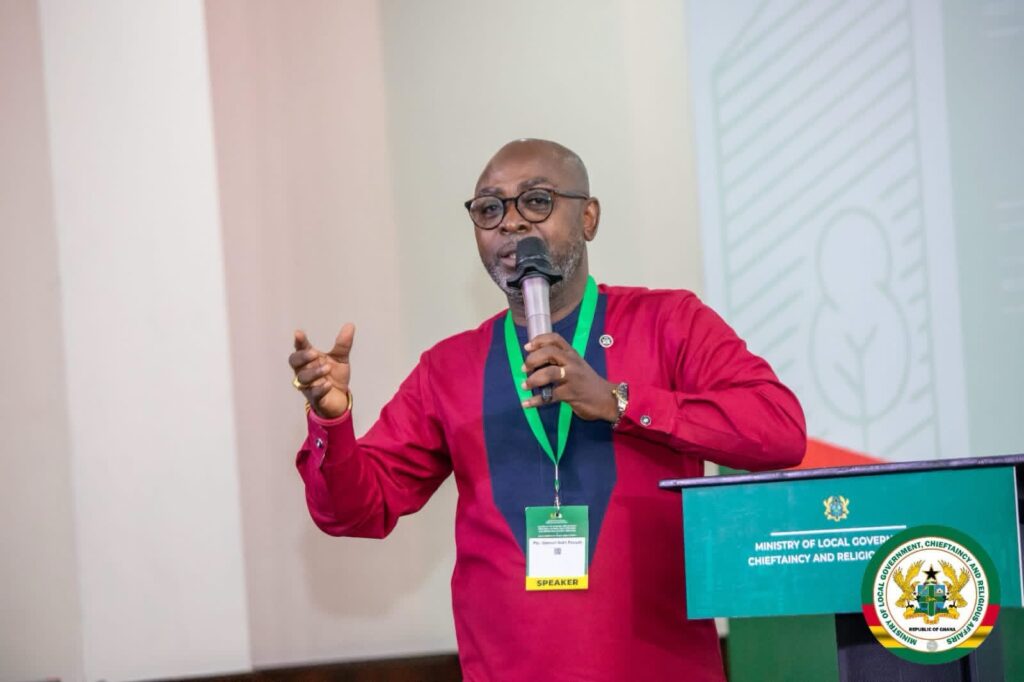
Delivering the keynote address on behalf of President John Dramani Mahama, the President’s Economic Advisor and Chairman of the National Development Planning Commission (NDPC), Dr Nii Moi Thompson, described the launch as a major milestone in the government’s efforts to reset Ghana’s development agenda through better urban planning and governance.
He said the country’s urban future is central to the government’s national development vision, stressing that as cities continue to expand, there must be deliberate and coordinated efforts to ensure that urban growth translates into improved living standards for all citizens.
“Our towns and cities are expanding at an unprecedented pace. As this growth continues, we must ensure that urbanisation is managed in a way that promotes inclusion, resilience, sustainability and shared prosperity,” Dr Thompson stated.
He commended the Ministry of Local Government, Chieftaincy and Religious Affairs, development partners, technical experts and all institutions that contributed to the preparation of the policy documents, describing their collaboration as critical to Ghana’s urban transformation agenda.
Reflecting on Ghana’s urban development journey, Dr Thompson recalled that the country’s first National Urban Policy was launched in 2012 during the administration of President John Dramani Mahama. He said the policy was a landmark initiative because it recognised urbanisation not simply as population growth but as a strategic opportunity for national economic and social development.
According to him, the implementation of the 2012 policy recorded an estimated 50 per cent success, with significant progress made in areas such as urban safety, spatial planning and environmental awareness. However, several critical targets remained unmet, particularly in affordable housing delivery, urban financing, institutional coordination, research, data systems and monitoring.
He explained that these implementation gaps were largely the result of inadequate financing, weak collaboration among institutions, limited integration of urban priorities into sectoral development plans and insufficient monitoring mechanisms.
Dr Thompson emphasised that the lessons learned from the previous policy informed the development of the new National Urban Policy and the National Slum Upgrading and Prevention Strategy.
He noted that Ghana’s urban population has grown rapidly over the past four decades, increasing from approximately four million people in the 1980s to nearly 14 million in 2020. Current projections, he said, indicate that the figure could rise to about 20.4 million by 2026.
Today, more than half of Ghana’s population lives in urban areas, and by 2030, nearly two out of every three Ghanaians are expected to reside in towns and cities.
While this growth has created opportunities for economic expansion, industrialisation and poverty reduction, Dr Thompson said it has also placed enormous pressure on infrastructure and public services.
He identified housing shortages, inadequate sanitation, traffic congestion, poor drainage systems, flooding, environmental degradation, weak development control and limited access to basic services as some of the major urban challenges confronting the country.
He warned that Ghana’s housing deficit could exceed two million housing units within the next decade if bold and coordinated interventions are not undertaken.
According to Dr Thompson, the newly launched policy and strategy have been designed to respond to these realities while positioning Ghana to meet both current and future urban development needs.
He explained that the frameworks are aligned with major international development commitments, including the Sustainable Development Goals (SDGs), the African Union’s Agenda 2063 and the New Urban Agenda.
The new policy seeks to promote economically competitive cities, socially inclusive communities, environmentally sustainable development and stronger urban governance systems.
Dr Thompson said the policy adopts a comprehensive approach that integrates spatial planning, land administration, affordable housing, climate resilience, environmental protection, economic transformation, urban financing, digital innovation and evidence-based decision-making.
He stressed that urban development should not come at the expense of Ghana’s cultural identity and historical heritage.
According to him, preserving monuments, heritage sites and cultural assets is essential not only for tourism but also for strengthening national identity, promoting social cohesion and preserving the country’s history for future generations.
Touching on economic development, Dr Thompson said the policy places strong emphasis on supporting local businesses, promoting innovation, strengthening the informal sector and creating employment opportunities, particularly for young people and women.
He also underscored the importance of sustainable financing, noting that one of the biggest lessons from the previous urban policy was that ambitious development goals cannot be achieved without adequate and reliable funding.
To address this challenge, he said the new policy encourages diversified financing models, improved local revenue mobilisation and stronger private sector participation in urban development.
Dr Thompson further highlighted the growing importance of technology in managing modern cities.
He explained that the policy promotes the use of Geographic Information Systems (GIS), digital planning platforms, intelligent transport systems, electronic permitting processes and other digital technologies to improve planning, transparency, revenue generation and public service delivery.
According to him, government has already begun implementing several initiatives that align with the objectives of the new policy.
These include investments in roads, drainage infrastructure, markets and other urban services under the Big Push infrastructure programme, as well as initiatives supporting the government’s 24-Hour Economy policy through improved logistics, enterprise development and expanded market opportunities.
He added that government is strengthening land administration through digitalisation while working closely with the Ministry of Works, Housing and Water Resources to increase housing delivery through innovative financing arrangements and enhanced private sector investment.
On climate change, Dr Thompson noted that Ghana’s urban centres remain increasingly vulnerable to flooding, rising temperatures and environmental degradation.
He said the policy prioritises climate-resilient urban planning through the protection of wetlands and water bodies, strict enforcement of building regulations in flood-prone areas, investments in resilient drainage systems and the expansion of urban green spaces and forests.
“Climate-responsive planning must become the standard approach across all urban interventions,” he stressed.
Dr Thompson called on Ministries, Departments and Agencies, Metropolitan, Municipal and District Assemblies, development partners, the private sector, civil society organisations and citizens to work together to ensure the successful implementation of the two policy documents.
He urged all implementing institutions to integrate the policy objectives into their development plans, budgets and programmes to ensure that the strategies produce measurable and lasting impact.
He cautioned against allowing the policy documents to become “policies on the shelf,” insisting that their success would ultimately depend on strong coordination, effective implementation, continuous monitoring and accountability.
“Coordination must no longer be optional. It must become central to how we operate. Monitoring and accountability must be strengthened, and results must be visible in the everyday lives of our people,” he said.
Dr Thompson concluded by expressing confidence that the National Urban Policy and Implementation Plan (2026–2035) and the National Slum Upgrading and Prevention Strategy (2026–2035) provide Ghana with a practical and forward-looking roadmap for transforming its cities into engines of economic growth, environmental sustainability and improved quality of life.
He called on all stakeholders to remain committed to the successful implementation of the two frameworks to ensure that Ghana’s rapidly growing urban centres become places of opportunity, prosperity and resilience for both present and future generations.
Story by: Ernest Frimpong (0247220948) | Follow our social media handles @uktvghana | DM us for Ads on our website or any of our socials